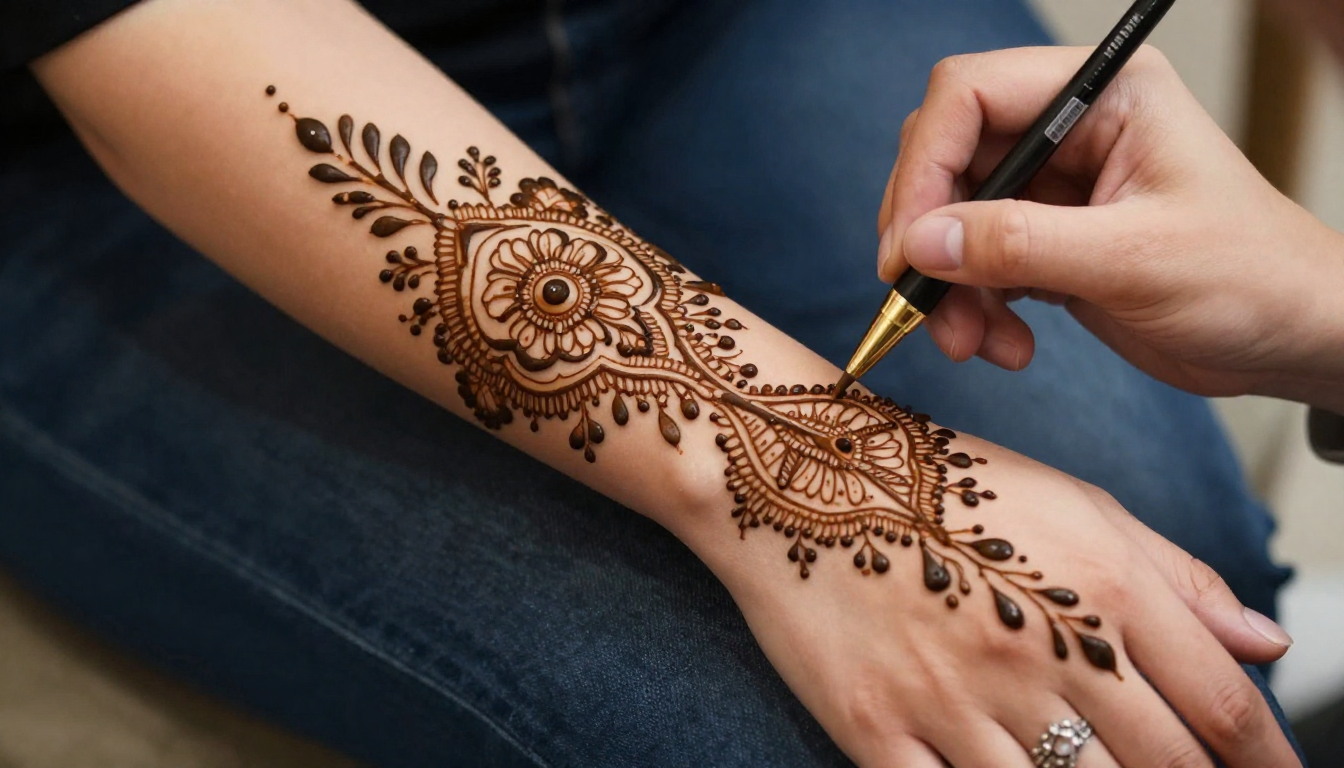
Henna Tattoo Designs: Beautiful Art vs. Risky Mistakes 2026
The Magic of Henna: Your Guide to Temporary Body Art
Have you ever wanted to try out a tattoo without the lifelong commitment or the sting of a needle? You aren’t alone. There is something truly captivating about the way henna rests on the skin, blooming from a dark paste into a rich, earthy glow. Henna tattoo designs have traveled across centuries and continents, evolving from ancient desert rituals into a global fashion statement. Whether you are prepping for a wedding or just want to spice up your weekend look, this art form offers a unique way to express yourself.
In this guide, we are going to dive deep into the world of henna. We will cover the most popular design styles and the essential safety tips you need to know. I’ll also share some personal tricks for making your stain last longer. By the time you finish reading, you’ll feel like an expert on everything from intricate mandalas to the dangers of “black henna.”
What Exactly is a Henna Tattoo?
Before we look at the art, let’s talk about the science. Henna comes from the Lawsonia inermis plant. People dry the leaves and grind them into a fine powder. When mixed with a liquid like lemon juice or water, it creates a paste. This paste contains “lawsone,” a natural dye molecule.
When you apply this paste to your skin, it binds to the proteins in your cells. This is why the stain is temporary. As your skin naturally exfoliates, the design fades away. It usually lasts between one to three weeks. It is a beautiful, fleeting cycle of art.
The Color Journey
One thing I love about henna is the color change. When the paste is first removed, the stain is often a bright, pale orange. Don’t panic! Over the next 24 to 48 hours, it oxidizes. It deepens into a rich reddish-brown or burgundy. This “magic” transition is part of the fun.
Exploring Popular Henna Tattoo Designs
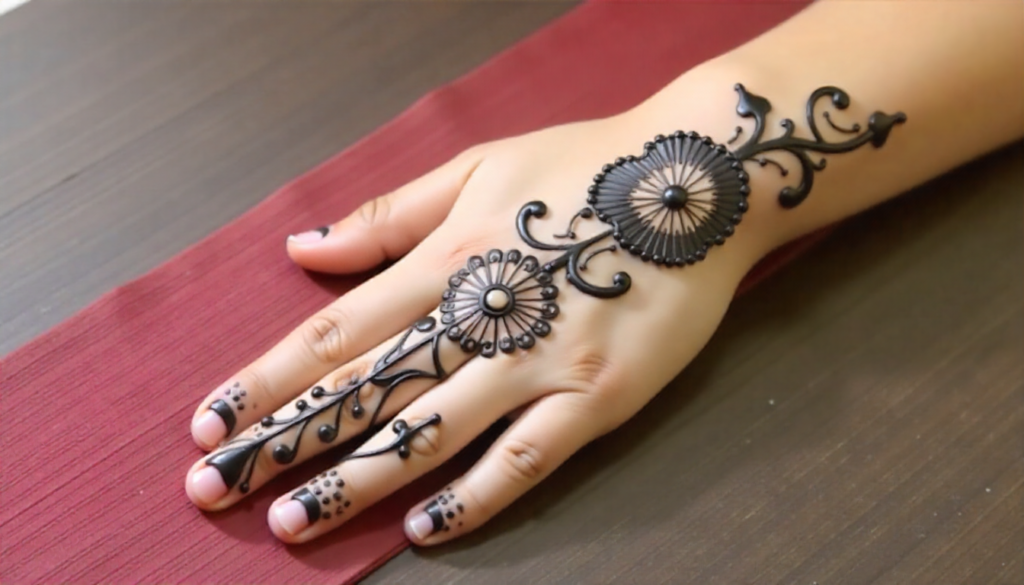
There are so many ways to wear henna. Depending on where the style originated, the patterns look very different. Here are the most common styles you will encounter today.
1. Indian (Mehendi) Styles
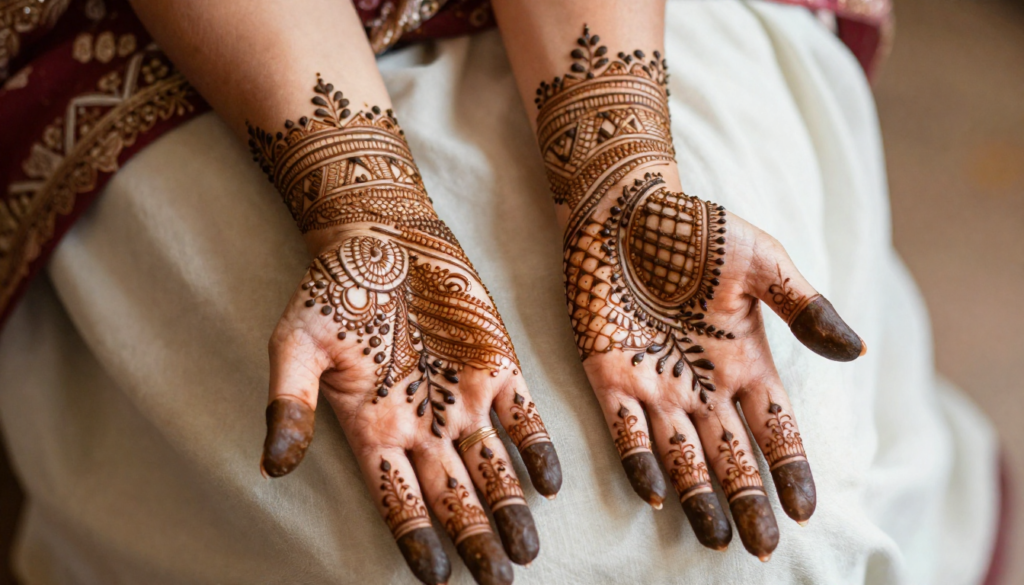
Indian designs are famous for being incredibly detailed. They often cover the entire hand and extend up the arm. You will see a lot of:
- Peacocks: Representing beauty and joy.
- Paisleys: Classic teardrop shapes.
- Mandala flowers: Circular patterns that represent the universe.
2. Arabic Patterns
If you prefer something a bit more “airy,” Arabic style is for you. These henna tattoo designs usually feature bold floral outlines. They don’t fill the entire hand. Instead, they flow gracefully across the skin. Large gaps are left empty to make the dark vines pop.
3. Moroccan and African Styles
These are very different from the floral looks. Moroccan henna is geometric and bold. It uses straight lines, triangles, and squares. It feels very modern and edgy. In many African cultures, the designs are thick and dark, sometimes used for protection or to mark a special life transition.
Why You Must Avoid “Black Henna”
I have to get serious for a moment because your safety matters. You might see street vendors offering “black henna” that stains instantly. Please, stay away from this. Natural henna is never black. It is always a brownish-green powder that leaves an orange or brown stain. “Black henna” usually contains a chemical called PPD (paraphenylenediamine). This is a coal-tar dye used in hair coloring.
- The Risk: PPD can cause severe chemical burns.
- The Damage: It can lead to permanent scarring.
- The Allergy: Once you react to it, you might be allergic to hair dye for life.
Always ask your artist what is in their paste. If they say it stains in 20 minutes and stays black, it isn’t natural henna. Your skin is your largest organ—treat it with kindness!
Choosing the Best Placement for Your Art
Where you put your henna affects how dark it gets. The skin on your palms and the soles of your feet is the thickest. This means it absorbs more dye.
- Palms: Usually result in the darkest, richest brown.
- Back of Hands: Stains well but fades a bit faster due to washing.
- Shoulders/Back: Usually results in a lighter, more subtle tan color.
- Ankles: A great spot for delicate, jewelry-like patterns.
I personally find that an ankle design is perfect for summer. It peeks out from under jeans or looks great with sandals.
How to Make Your Henna Stain Last
You’ve spent an hour sitting still while an artist creates a masterpiece. Now, you want it to last! Here is my tried-and-true routine for a long-lasting stain.
The “Stay Put” Rule
Leave the paste on for as long as possible. Six to eight hours is the sweet spot. Many people apply it at night and wrap it carefully so they can sleep with it on. The longer the paste touches the skin, the deeper the dye goes.
The Lemon-Sugar Secret
Many artists use a sealant. This is a mix of lemon juice and sugar dabbed over the dried paste. The sugar keeps the paste stuck to your skin. The lemon juice keeps the henna “active.” It prevents the paste from cracking and falling off too early.
Heat is Your Friend
Henna loves warmth. Keep your hands warm while the paste is on. Some people even use a hairdryer on a low setting to gently heat the design.
Avoid Water at First
This is the hardest part. Once you scrape the paste off, try not to let water touch the area for 24 hours. Use a natural oil, like coconut or olive oil, to protect the stain if you have to shower. Water can “interrupt” the oxidation process and lead to a lighter stain.
Modern Trends in Henna Tattoo Designs
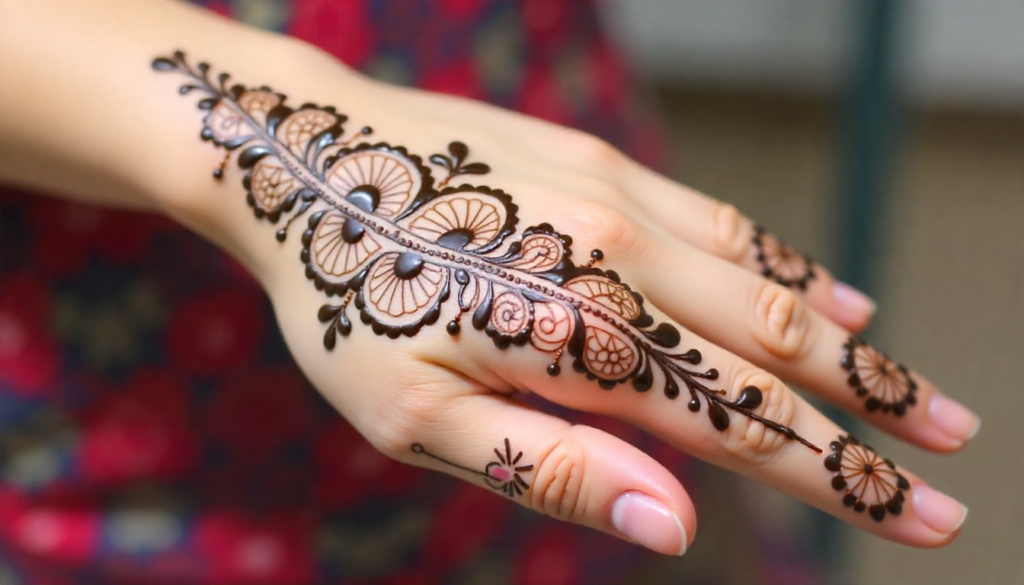
While traditional patterns are timeless, modern artists are getting creative. We are seeing a huge shift in how people use this medium.
- Henna Crowns: Women undergoing chemotherapy often use henna to create beautiful patterns on their heads. It is a powerful way to reclaim beauty during a tough time.
- White “Henna”: Note that this isn’t actually henna. It is a skin-safe adhesive or body paint. It doesn’t stain the skin, but it looks stunning for weddings and photoshoots.
- Minimalist Accents: Sometimes, just a small ring pattern on one finger or a tiny star on the wrist is enough to make a statement.
DIY Henna: Can You Do It at Home?
You can absolutely try this at home! However, I recommend buying pre-mixed cones from a reputable supplier. Look for “Artisan” or “Hand-mixed” henna. Avoid the mass-produced cones sold in grocery stores, as they often contain preservatives that can irritate the skin.
If you are a beginner, start with simple dots and lines. Practice on a piece of paper first to get a feel for the pressure of the cone. It’s a very relaxing hobby once you get the hang of it!
Conclusion
Whether you choose a complex Indian bridal pattern or a simple geometric design, henna tattoo designs are a beautiful way to celebrate your body. They remind us that art doesn’t have to be permanent to be meaningful. Just remember to stick to natural ingredients and give your skin the time it needs to develop that gorgeous glow.
Have you ever tried henna before? Or are you planning your first design? I’d love to hear about your favorite patterns or any questions you still have!
FAQs
1. How long does a henna tattoo last?
Most designs last between 7 to 14 days. This depends on your skin type, where the tattoo is located, and how often you wash the area.
2. Is henna safe for children?
Natural henna is generally very safe for children. However, always do a small patch test first to ensure there is no sensitivity to the essential oils used in the paste.
3. Does it hurt to get a henna tattoo?
Not at all! It is a completely painless process. The paste feels cool and wet on the skin, and the application is often described as feeling like a light massage.
4. Can I go swimming with henna?
Chlorine and salt water will make your henna fade much faster. If you go for a dip, try applying a thin layer of waterproof balm or oil over the design first.
5. How do I remove a henna tattoo if I don’t like it?
You can’t “erase” it instantly, but you can speed up the fading. Gently exfoliating the area with a salt scrub or soaking in warm soapy water will help lift the stained skin cells.
Also Read : Glow Liquid