How Much Caffeine In a Cup of Coffee
Introduction
You reach for that morning cup of coffee, and the first sip feels like a promise. Energy. Focus. The motivation to tackle your day. But have you ever stopped to wonder exactly how much caffeine you’re getting with each cup?
Understanding how much caffeine in a cup of coffee can change everything about your coffee experience. It helps you avoid those jittery afternoons. It lets you time your caffeine intake perfectly. And it gives you control over your energy levels throughout the day.
The truth is, not all coffee is created equal. Your regular morning brew might pack twice the caffeine punch of your friend’s favorite blend. The type of beans, brewing method, and even the size of your cup all play crucial roles. In this article, you’ll discover the real numbers behind your daily coffee habit, what factors influence caffeine content, and how to make smarter choices about your caffeine consumption.
How Much Caffeine in a Cup of Coffee: The Basic Numbers
Let’s start with the fundamentals. An average 8-ounce cup of brewed coffee contains between 80 and 100 milligrams of caffeine. However, this number can swing wildly depending on several factors.
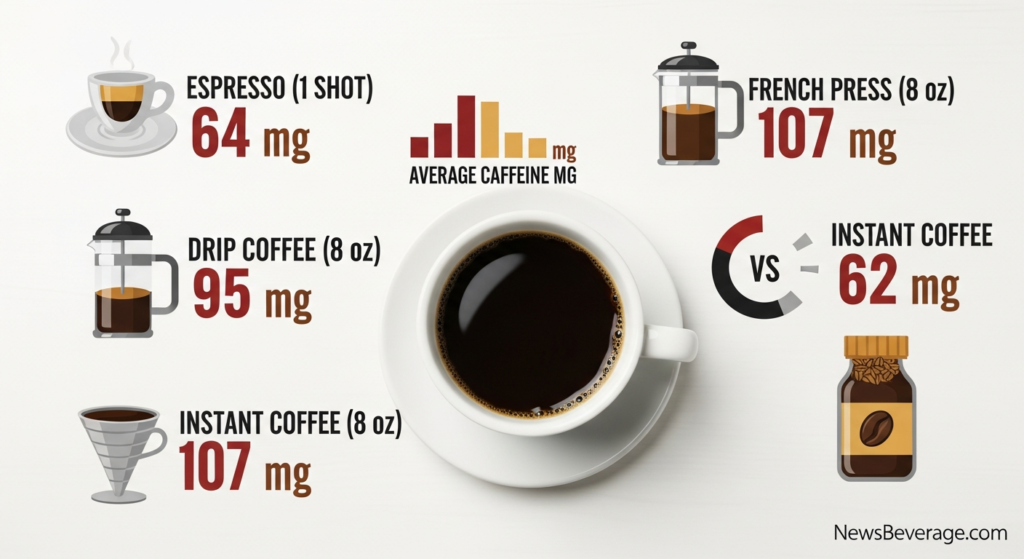
Most standard home-brewed coffee falls into this range. When you brew coffee at home using a drip machine, you’re likely getting around 95 milligrams per 8-ounce serving. This is the baseline that most health organizations use when they talk about coffee consumption.
But here’s where things get interesting. That number isn’t fixed. Your actual caffeine intake can range anywhere from 65 milligrams to over 200 milligrams per cup. The variation depends on your brewing method, coffee type, and serving size.
Think about your local coffee shop. Their “small” is often 12 ounces, not 8. Their “medium” might be 16 ounces. Suddenly, you’re not getting one serving of caffeine. You’re getting one and a half or even two servings in a single cup.
What Affects Caffeine Levels in Your Coffee

Coffee Bean Type
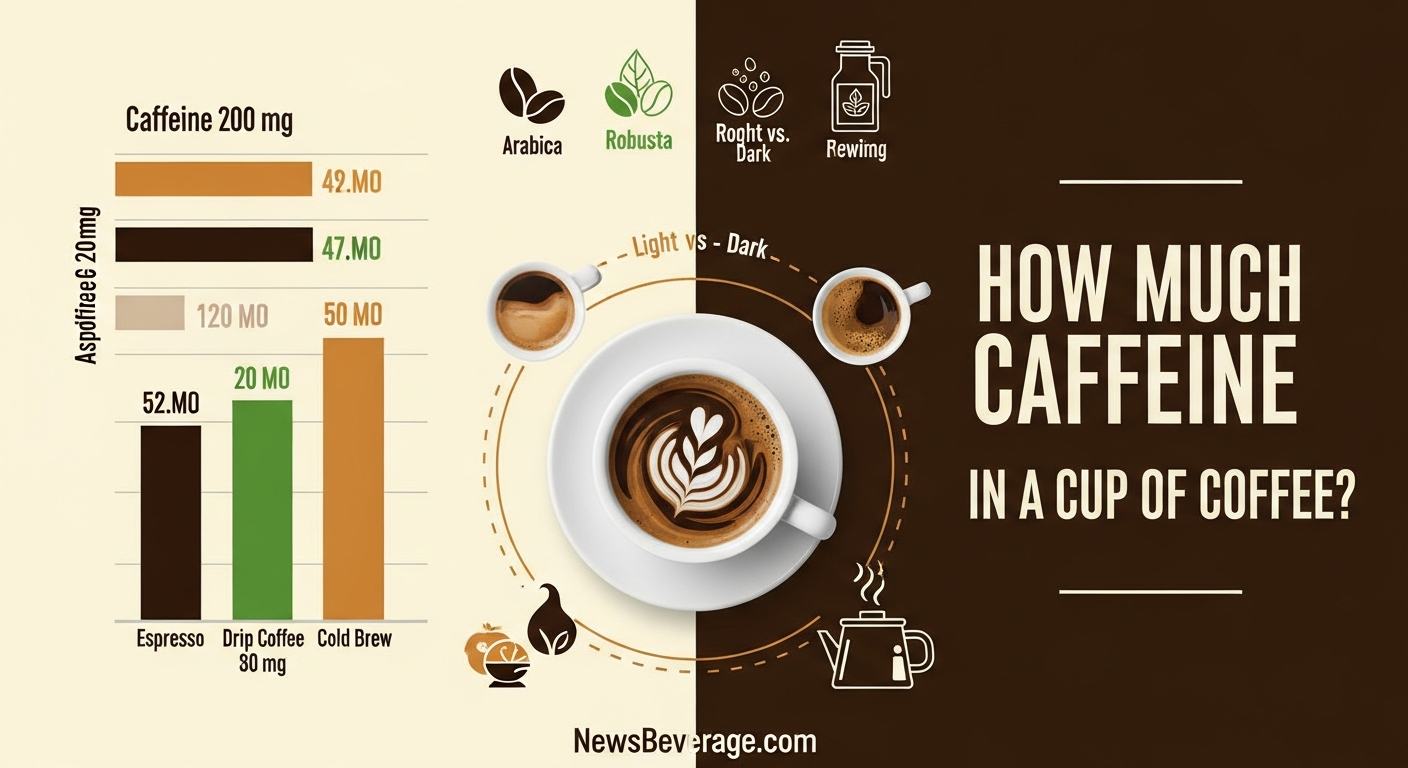
The type of coffee bean matters more than you might think. There are two main species of coffee beans that dominate the market: Arabica and Robusta.
Arabica beans are the premium choice. They taste smoother and less bitter. Most specialty coffee shops use Arabica beans exclusively. These beans contain about 1.2% to 1.5% caffeine by weight.
Robusta beans pack a stronger punch. They contain nearly twice the caffeine of Arabica beans, sitting at around 2.2% to 2.7% caffeine by weight. They also taste more bitter and harsh. Many instant coffees and budget blends use Robusta beans specifically for that extra caffeine kick.
When you see “100% Arabica” on a coffee bag, you’re looking at a smoother taste but potentially less caffeine. When the label doesn’t specify, there’s a good chance Robusta beans are in the mix.
Roast Level
Here’s a common misconception. Many people believe dark roast coffee has more caffeine than light roast. The opposite is actually true, though the difference is smaller than you’d expect.
Light roast coffee retains slightly more caffeine. The roasting process burns off a tiny amount of caffeine. Dark roasts spend more time roasting, so they lose a bit more caffeine in the process.
However, the difference is minimal. We’re talking about maybe 5% variation at most. The bigger difference is in the beans themselves. Dark roast beans are less dense because they’ve been roasted longer. When you measure by volume (like scoops), light roast actually gives you more caffeine because the beans are denser.
If you measure by weight instead of volume, the caffeine content becomes nearly identical. This is why the roast level matters less than most people think.
Brewing Method
Your brewing method makes a massive difference in how much caffeine ends up in your cup. Different methods extract caffeine at different rates.
Drip Coffee: This standard method gives you about 95 milligrams per 8 ounces. The hot water passes through the grounds once, extracting a moderate amount of caffeine.
French Press: This method produces one of the strongest regular brews. You get approximately 100 to 120 milligrams per 8 ounces. The grounds steep directly in hot water for several minutes, allowing maximum extraction.
Cold Brew: This trendy option is deceptively strong. Cold brew can contain 150 to 200 milligrams per 8 ounces. The long steeping time (12 to 24 hours) extracts more caffeine despite the lower temperature.
Espresso: Here’s where it gets confusing. A single shot of espresso (1 ounce) contains about 63 milligrams of caffeine. That’s less than a cup of drip coffee. However, espresso is concentrated. Ounce for ounce, it has more caffeine than any other brewing method.
Pour Over: This manual method gives you about 80 to 100 milligrams per 8 ounces. The careful, controlled pour creates a clean cup with moderate caffeine extraction.
Serving Size
This factor trips up more people than any other. Coffee sizes have inflated dramatically over the past few decades.
A “tall” at Starbucks is 12 ounces. Their “grande” is 16 ounces. A “venti” hot coffee is 20 ounces. When you order a venti drip coffee, you’re consuming roughly 400 milligrams of caffeine. That’s four times what we consider a standard serving.
Many coffee shops serve even larger sizes. Some gas stations offer 24-ounce or 32-ounce cups. A 32-ounce coffee could contain 500 milligrams or more of caffeine. That’s more than double the recommended daily limit in a single cup.
Pay attention to serving sizes. They matter much more than most other factors when calculating your caffeine intake.
Caffeine Content by Popular Coffee Drinks
Let’s break down specific drinks you might order at a coffee shop.
Brewed Coffee (Grande, 16 oz): Approximately 310 milligrams. This is your standard drip coffee in a medium size.
Americano (Grande): About 225 milligrams. An Americano is espresso shots plus hot water. A grande typically contains three shots.
Latte (Grande): Approximately 150 milligrams. Lattes contain fewer espresso shots (usually two) and lots of steamed milk.
Cappuccino (Grande): About 150 milligrams. Similar to a latte in terms of espresso content.
Cold Brew (Grande, 16 oz): Roughly 200 to 300 milligrams. This varies significantly by brand and preparation method.
Nitro Cold Brew (Grande): Often 280 to 300 milligrams. The nitrogen infusion doesn’t affect caffeine content, but these drinks are typically made from strong cold brew concentrate.
Decaf Coffee (Grande): About 15 to 30 milligrams. Yes, decaf still contains some caffeine. It’s not completely caffeine-free.
Instant Coffee (8 oz): Approximately 60 to 80 milligrams. Instant coffee generally has less caffeine than brewed coffee.
How Caffeine Affects Your Body
Caffeine works by blocking adenosine receptors in your brain. Adenosine is a chemical that makes you feel tired. When caffeine blocks these receptors, you feel more alert and awake.
The effects start within 15 minutes of drinking coffee. Peak caffeine levels hit your bloodstream around 45 minutes after consumption. You’ll feel the maximum effects during this window.
Caffeine has a half-life of about 5 to 6 hours in most people. This means that six hours after drinking coffee, half the caffeine is still in your system. If you drink a cup with 200 milligrams at 2 PM, you still have 100 milligrams at 8 PM.
This explains why afternoon coffee can disrupt your sleep. Even if you don’t feel wired at bedtime, the caffeine is still working in your system.
Individual tolerance varies widely. Some people metabolize caffeine faster due to genetic differences. Others process it slowly. Your age, liver function, medications, and even pregnancy status all affect how quickly you clear caffeine from your body.
Recommended Caffeine Limits
Health experts generally agree on safe caffeine consumption levels. For healthy adults, up to 400 milligrams per day is considered safe. That’s roughly four 8-ounce cups of brewed coffee.
However, this is an upper limit, not a target. Many people function best with less caffeine. Some need only one cup in the morning.
Pregnant women should limit caffeine to 200 milligrams per day or less. Some healthcare providers recommend avoiding it entirely during pregnancy. The developing fetus processes caffeine much more slowly than adults.
Teenagers should consume no more than 100 milligrams per day. Their developing brains are more sensitive to caffeine’s effects. Children under 12 should avoid caffeine completely, according to most pediatricians.
People with certain health conditions need to be more careful. If you have anxiety disorders, heart arrhythmias, or high blood pressure, talk to your doctor about safe caffeine levels.
Signs You’re Consuming Too Much Caffeine
Your body will tell you when you’ve overdone it. Common signs of excessive caffeine intake include jitteriness, anxiety, rapid heartbeat, and digestive issues.
Sleep problems are often the first red flag. If you’re having trouble falling asleep or staying asleep, look at your caffeine timing and total intake. Insomnia and caffeine overconsumption go hand in hand.
Persistent headaches can signal caffeine dependence. When you regularly consume high amounts of caffeine, your body adapts. Missing your usual dose triggers withdrawal headaches.
Digestive upset is another common symptom. Coffee stimulates stomach acid production. Too much can lead to heartburn, acid reflux, or stomach pain.
Feeling shaky or experiencing hand tremors indicates your nervous system is overstimulated. This usually happens at doses above 500 milligrams.
If you’re experiencing these symptoms, try reducing your intake gradually. Cutting back suddenly can cause withdrawal symptoms like headaches, fatigue, and irritability.
How to Control Your Caffeine Intake
You have several strategies for managing your caffeine consumption. Start by tracking what you actually drink. Many people underestimate their daily intake.
Use measuring cups at home instead of eyeballing it. Most coffee mugs hold 12 to 16 ounces, not the standard 8 ounces we use for nutritional information.
Switch to smaller sizes when ordering out. Instead of a grande, try a tall. You’ll save money and consume less caffeine.
Consider half-caf options. Many coffee shops will mix regular and decaf beans for you. This gives you the coffee taste with half the caffeine.
Time your coffee consumption strategically. Stop drinking caffeinated coffee at least 6 hours before bedtime. For some people, 8 to 10 hours before bed is better.
Try alternatives for your afternoon energy slump. A short walk, some stretching, or a healthy snack often works better than another cup of coffee.
Alternate caffeinated and decaffeinated cups throughout the day. This gives you the ritual and taste of coffee without excessive caffeine.
The Bottom Line on Coffee Caffeine Content

Understanding how much caffeine in a cup of coffee empowers you to make better choices. Your average home-brewed cup contains about 95 milligrams, but this number varies based on bean type, roast level, brewing method, and serving size.
Pay attention to what you’re actually drinking. That medium coffee from your favorite shop probably contains 200 to 300 milligrams. Multiple cups throughout the day can easily push you over the recommended limit.
Listen to your body. If you’re feeling jittery, anxious, or having trouble sleeping, your caffeine intake might be too high. Reduce gradually to avoid withdrawal symptoms.
Remember that caffeine affects everyone differently. What works for your coworker might be too much for you. Find your personal sweet spot where you get the benefits without the downsides.
Coffee can be a wonderful part of your daily routine. It offers genuine benefits like improved focus, enhanced physical performance, and even some health advantages. The key is consuming it mindfully and staying within reasonable limits.
What’s your current coffee routine? Have you ever tracked your actual caffeine intake? You might be surprised by the numbers.
Frequently Asked Questions
Q: Does dark roast or light roast have more caffeine? Light roast coffee has slightly more caffeine than dark roast, but the difference is minimal. When measured by weight, they’re nearly identical. The roasting process burns off a tiny amount of caffeine, so light roasts retain slightly more. However, dark roast beans are less dense, so if you measure by volume (scoops), light roast gives you more caffeine per scoop.
Q: How much caffeine is too much in a day? For healthy adults, up to 400 milligrams of caffeine daily is considered safe. This equals about four 8-ounce cups of brewed coffee. However, individual tolerance varies. Pregnant women should limit intake to 200 milligrams or less. If you experience anxiety, jitters, or sleep problems, you may need to consume less than the general recommendation.
Q: Does espresso have more caffeine than regular coffee? A single shot of espresso (1 ounce) contains about 63 milligrams of caffeine, which is less than an 8-ounce cup of drip coffee. However, espresso is more concentrated. Ounce for ounce, espresso has more caffeine. A typical espresso-based drink with two shots contains 120 to 130 milligrams of caffeine.
Q: Is decaf coffee completely caffeine-free? No, decaf coffee still contains some caffeine. An 8-ounce cup of decaf typically has 2 to 15 milligrams of caffeine. The decaffeination process removes about 97% of the caffeine, but trace amounts remain. If you’re extremely sensitive to caffeine or trying to eliminate it completely, be aware that decaf isn’t truly caffeine-free.
Q: Why does cold brew have more caffeine? Cold brew coffee contains more caffeine because of its long steeping time. The grounds sit in cold water for 12 to 24 hours, allowing for maximum caffeine extraction. This extended contact time pulls more caffeine from the beans than traditional hot brewing methods. A typical 8-ounce serving of cold brew contains 150 to 200 milligrams of caffeine.
Q: How long does caffeine stay in your system? Caffeine has a half-life of about 5 to 6 hours in most adults. This means that six hours after consuming caffeine, half of it remains in your bloodstream. If you drink coffee with 200 milligrams of caffeine at noon, you’ll still have about 100 milligrams at 6 PM. Complete elimination takes much longer, typically 10 hours or more.
Q: Can you build up a tolerance to caffeine? Yes, regular caffeine consumption leads to tolerance. Your body adapts to the presence of caffeine, and you need more to achieve the same effects. This is why some people can drink multiple cups without feeling much impact. Taking periodic breaks from caffeine can help reset your tolerance and restore its effectiveness.
Q: Does adding milk or sugar change caffeine content? No, adding milk, cream, or sugar doesn’t change the caffeine content in your coffee. These additions affect taste, calories, and nutritional value, but the caffeine remains the same. However, diluting your coffee with a large amount of milk (like in a latte) means you’re consuming less coffee overall, which reduces total caffeine per ounce.
Q: What time should I stop drinking coffee to sleep well? Most experts recommend stopping caffeine consumption at least 6 hours before bedtime. For some people, 8 to 10 hours is necessary. If you go to bed at 10 PM, your last cup should be no later than 4 PM. Everyone metabolizes caffeine differently, so pay attention to how afternoon coffee affects your sleep quality.
Q: Is instant coffee lower in caffeine? Yes, instant coffee generally contains less caffeine than brewed coffee. An 8-ounce cup of instant coffee has about 60 to 80 milligrams of caffeine, compared to 95 milligrams in brewed coffee. The instant coffee manufacturing process involves brewing coffee and then dehydrating it, which results in some caffeine loss.
Also Read : Henna Tattoo Designs