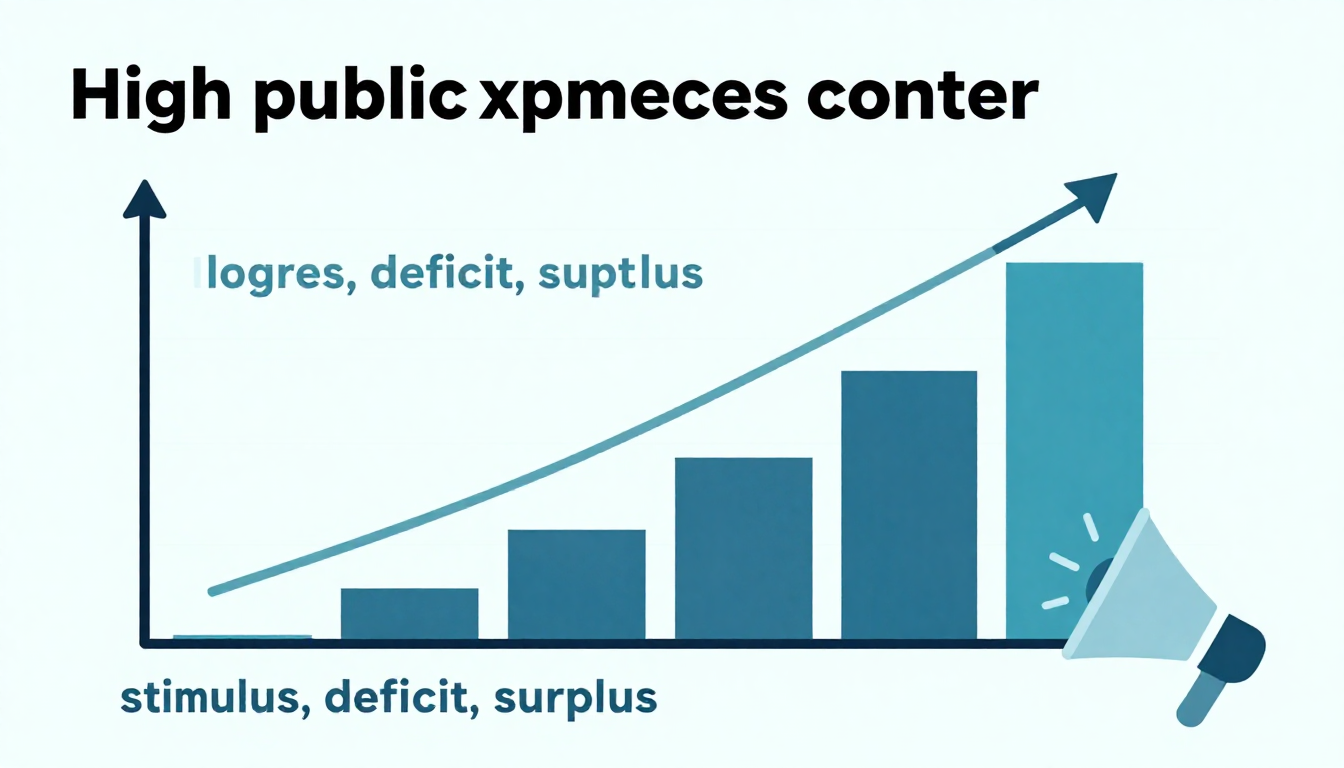
high government expenditures can lead to a bigger revenue. stimulus. deficit. surplus. Dangerously Boost or Destroy Revenue
What if the government spending more money actually made your country richer? That sounds counterintuitive, right? Most of us grow up thinking that spending more than you earn is a recipe for disaster. But when it comes to national economies, the rules work differently, and sometimes, surprisingly well.
High government expenditures can lead to a bigger revenue when done strategically. Through tools like economic stimulus, policymakers can pump money into a struggling economy and trigger a chain reaction of growth, jobs, and tax income. But there is a dangerous flip side. Uncontrolled spending creates massive deficits that can haunt a country for generations.
In this article, you will learn exactly how government spending shapes national revenue, when a deficit helps versus hurts, what a surplus really means for citizens, and how stimulus packages fit into all of it. Whether you follow economic news or just want to understand where your tax money goes, this guide breaks it down for you clearly.
What Does “High Government Expenditure” Actually Mean?
Government expenditure refers to the money a government spends on goods, services, salaries, infrastructure, social programs, defense, education, and more.
When spending goes high, it typically means the government is investing heavily in the economy. This might include building highways, funding schools, paying healthcare workers, or rolling out social safety nets during a crisis.
According to the International Monetary Fund, government spending in advanced economies averaged around 40% of GDP in recent years. In some countries, it climbs even higher during recessions or crises.
High spending is not inherently bad. It depends entirely on what the money is used for and how it is financed.
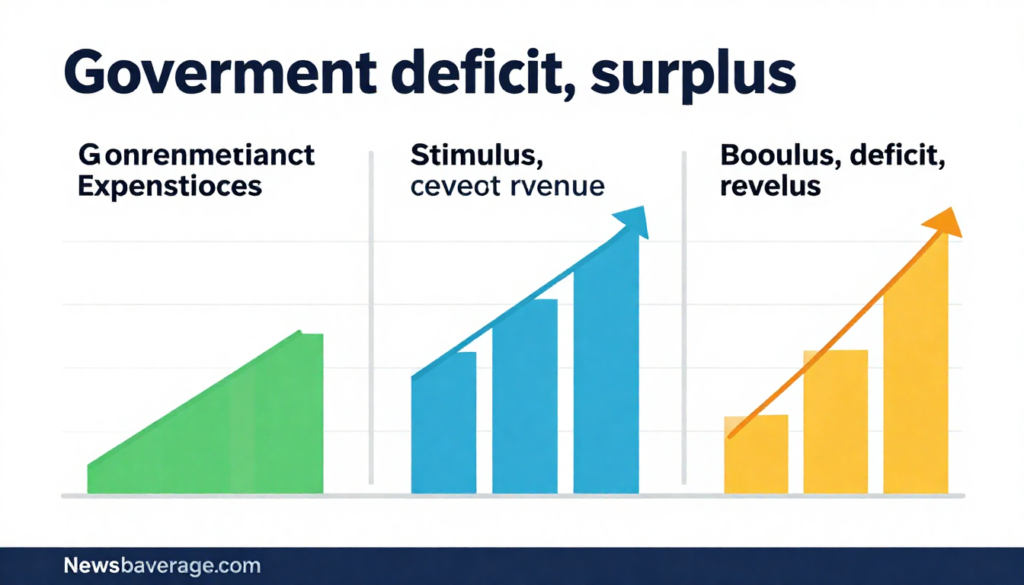
How High Government Expenditures Can Lead to a Bigger Revenue
Here is the key idea that many people miss: government spending can pay for itself, and then some.
When the government spends money, it enters the economy. Workers get paid. Businesses earn contracts. People spend their income at local shops. Those shops pay taxes. The government collects more tax revenue. This cycle is called the fiscal multiplier effect.
The Multiplier Effect Explained Simply
Think of it this way. The government spends $1 billion building a new highway. That money goes to construction companies. Construction workers get salaries. They buy groceries, cars, and rent apartments. Those businesses hire more people. Everyone pays income and sales taxes.
By the end of this cycle, the government may collect $1.3 billion or more in taxes from economic activity that was triggered by that original $1 billion. That is a multiplier of 1.3.
Research from economists at Harvard and the IMF has shown multipliers can range from 0.8 to 1.8 depending on the type of spending and the economic condition at the time.
Key areas where spending typically generates strong revenue returns include:
- Infrastructure investment (roads, ports, broadband)
- Education and job training programs
- Healthcare access and public health
- Research and development funding
These investments improve productivity, raise wages, expand the tax base, and reduce long-term costs like welfare and emergency services.
What Is an Economic Stimulus and Why Does It Matter?
A stimulus is a specific government policy designed to boost economic activity during a slowdown or recession. It typically involves increased spending, tax cuts, or direct payments to citizens and businesses.
You have seen this in action. During the 2008 financial crisis, governments worldwide launched massive stimulus packages. During the COVID-19 pandemic, countries injected trillions of dollars into their economies through stimulus checks, business loans, and infrastructure programs.
How Stimulus Generates Revenue
When the economy slows down, people lose jobs, businesses shut down, and tax revenue drops. high government expenditures can lead to a bigger revenue. stimulus. deficit. surplus. faces a choice: cut spending and risk a deeper recession, or spend more to restart economic activity.
Stimulus works by doing three things:
- Keeping money flowing when private spending collapses
- Protecting jobs so people keep paying taxes and consuming
- Building confidence so businesses invest again
A well-timed stimulus can prevent a recession from becoming a depression. And when the economy recovers, tax revenues rise sharply, often recovering much of what was spent.
The American Recovery and Reinvestment Act of 2009 cost roughly $831 billion. Studies suggest it saved or created around 3 million jobs and prevented the unemployment rate from climbing much higher than it did.
Understanding the Deficit: When Spending Exceeds Revenue
A deficit happens when the government spends more than it collects in taxes and other revenue within a given year.
Deficits are not automatically dangerous. In fact, during a recession or emergency, running a deficit is often the responsible choice. The alternative, cutting spending when an economy is already suffering, can trigger layoffs, reduced services, and a longer downturn.
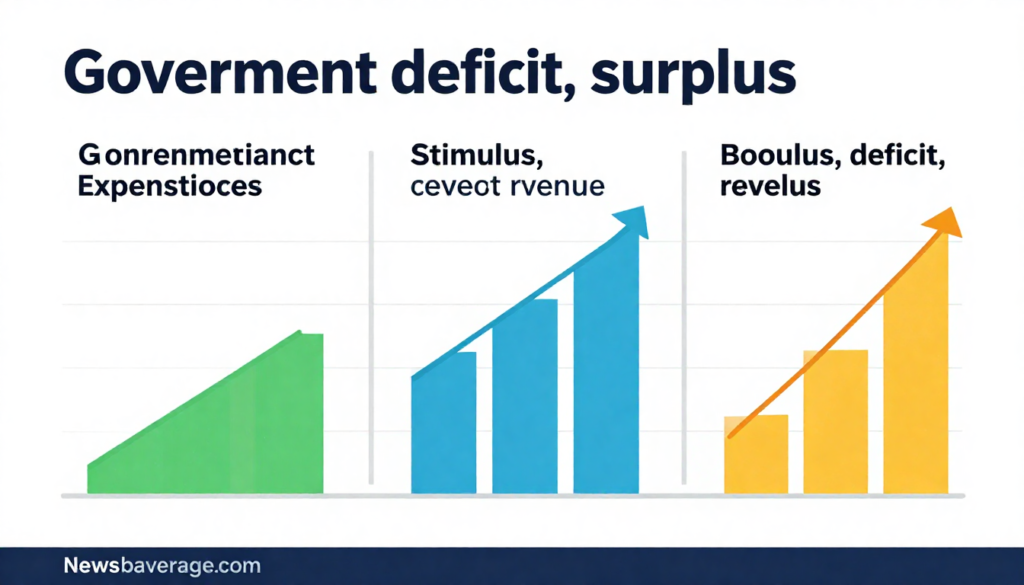
Short-Term Deficits vs Long-Term Deficits
Here is where it gets important:
Short-term deficits during a crisis or growth investment phase can be manageable. Interest rates matter here. When borrowing is cheap, governments can invest now and pay back with future tax revenue generated by growth.
Long-term structural deficits are more dangerous. If a government consistently spends far more than it earns year after year, the national debt grows. Interest payments on that debt consume more of the budget. Eventually, there is less money for services, and the country becomes vulnerable to financial instability.
Countries like Japan and the United States carry enormous national debts. Japan’s debt exceeds 260% of its GDP. Yet Japan has not collapsed financially because it borrows in its own currency and maintains strong institutional confidence.
Still, very high deficits over time reduce fiscal space, meaning the government has less flexibility to respond to future emergencies.
What Is a Surplus and Is It Always a Good Thing?
A surplus occurs when government revenue exceeds expenditure in a given period. Politicians love to talk about surpluses as signs of fiscal discipline.
But here is a nuance most people do not hear: a surplus is not always a good thing.
When a Surplus Hurts the Economy
If a government cuts spending dramatically to achieve a surplus, it can pull money out of the economy too quickly. This reduces demand, slows growth, and can increase unemployment.
Greece is a painful example. During the Eurozone debt crisis, Greece was forced to impose severe austerity measures to reduce its deficit and achieve a surplus. The result was a deep economic depression, soaring unemployment above 25%, and years of lost growth.
When a Surplus Is Genuinely Beneficial
A surplus is most beneficial when:
- The economy is running hot and there is a risk of inflation
- The government uses the surplus to pay down debt, reducing future interest costs
- The surplus is saved for future investment or emergency reserves
Norway’s Government Pension Fund, funded by oil revenue surpluses, is one of the world’s best examples of smart surplus management. The fund now holds over $1.7 trillion in assets, securing future generations.
The Relationship Between Spending, Stimulus, Deficit, and Surplus
These four concepts are deeply connected. Think of them as a cycle:
The government increases expenditure to fund a stimulus. That spending may create a deficit in the short term. But if the stimulus works, economic growth generates tax revenue that eventually creates a surplus or at least closes the deficit gap.
This is called counter-cyclical fiscal policy: spend more in downturns, save or reduce debt in booms. It is the approach most recommended by mainstream economists and international financial institutions.
The challenge is political. Governments often spend during downturns (popular) but fail to reduce spending during good times (unpopular). This creates structural deficits that compound over time.
Real-World Examples: When It Worked and When It Did Not
When It Worked: South Korea’s 1997 Recovery
After the Asian financial crisis, South Korea combined government spending with structural reforms. The government invested in technology and innovation, laid off unproductive workers in state industries, and encouraged private investment. Within a few years, South Korea’s economy had not only recovered but grown stronger. Tax revenues rose significantly, and the deficit narrowed.
When It Did Not Work: Argentina’s Repeated Crises
Argentina has repeatedly cycled through heavy government spending, growing deficits, loss of investor confidence, currency collapse, and economic crisis. The country has defaulted on its national debt multiple times. The lesson: spending without a credible path to revenue growth or debt management creates dangerous instability.
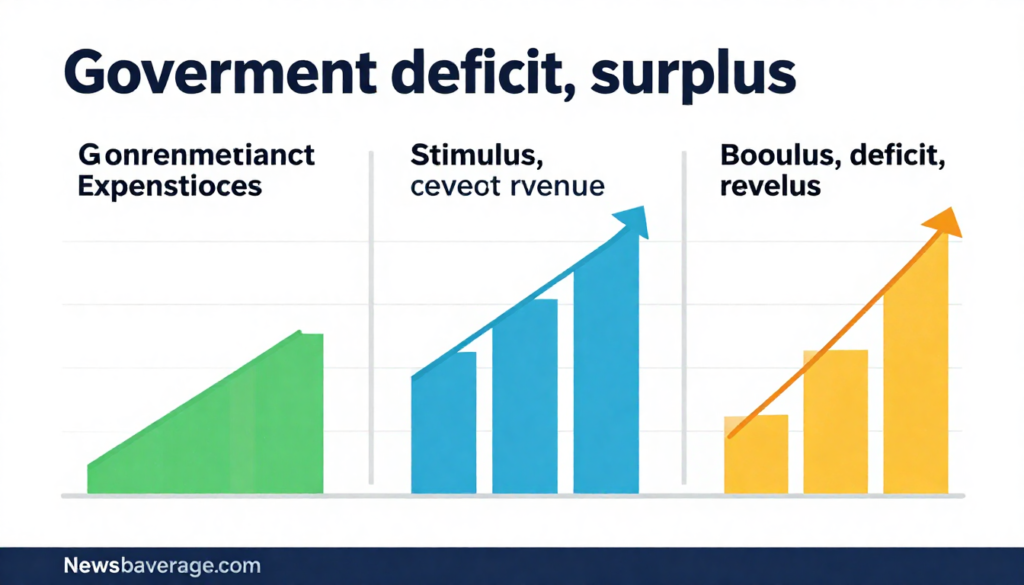
What This Means for You as a Citizen
You might wonder, “Why should I care about deficits and surpluses?” Here is why it matters directly to you:
- Higher deficits can lead to higher taxes in the future to pay off debt
- Smart stimulus spending can mean more jobs, better roads, and stronger schools in your community
- Surpluses managed well protect public services from future economic shocks
- Mismanaged spending erodes the value of the currency, raising your cost of living
Understanding how government spending translates to economic outcomes makes you a more informed voter, a smarter investor, and a more financially aware citizen.
Key Takeaways
High government expenditures can lead to bigger revenue when channeled into productive investments and timely stimulus. But the same spending, if undisciplined or poorly directed, creates deficits that damage long-term fiscal health. Surpluses, while often celebrated, need context. They can reflect healthy fiscal management or the painful result of economic contraction.
The relationship between spending, stimulus, deficit, and surplus is not black and white. It is a dynamic interplay that shapes the financial health of every nation and, ultimately, the quality of life of every citizen.
What do you think? Should your government prioritize paying down the national debt or investing more in infrastructure and education? Leave your thoughts in the comments, share this article with someone who talks about the economy, or take a deeper look at your country’s national budget documents. You might be surprised at what you find.
Frequently Asked Questions
1. Can high government expenditures always lead to more revenue? Not always. The outcome depends on the type of spending, economic conditions, and how effectively the funds are deployed. Productive investment in infrastructure or education tends to generate revenue returns. Wasteful or poorly managed spending does not.
2. What is the difference between a deficit and debt? A deficit is the gap between spending and revenue in a single year. Debt is the accumulation of all past deficits. A country can run a deficit this year while still having outstanding debt from previous years.
3. Is a government surplus always good for citizens? Not necessarily. If a surplus is achieved through extreme spending cuts, it can reduce essential services, raise unemployment, and slow economic growth. Context matters significantly.
4. What is a stimulus package? A stimulus package is a set of economic measures, usually including increased government spending, tax cuts, or direct payments, designed to boost economic activity during a slowdown or crisis.
5. How does government spending create tax revenue? When the government spends money, it enters the economy through wages and contracts. Workers and businesses earn income. They spend and invest. That activity generates income tax, sales tax, and corporate tax revenue for the government.
6. What happens when a country has too much debt? Excessive debt can increase interest payments, reduce government flexibility, lower credit ratings, raise borrowing costs, and, in severe cases, lead to currency devaluation or default.
7. How do economists measure the impact of government spending? Economists use the fiscal multiplier, which measures how much economic output is generated per dollar of government spending. A multiplier above 1.0 suggests spending generates more economic activity than its cost.
8. What is counter-cyclical fiscal policy? It is the strategy of increasing government spending during economic downturns to stimulate growth and reducing spending or building surpluses during economic booms to avoid overheating the economy.
9. Can stimulus spending cause inflation? Yes, if stimulus is too large relative to the economy’s capacity, it can increase demand faster than supply, leading to inflation. This is why timing, scale, and targeting of stimulus are critical.
10. Which countries are best known for managing surpluses well? Norway is often cited as a top example, using oil revenue surpluses to build one of the world’s largest sovereign wealth funds. Singapore and Germany have also demonstrated strong surplus management at various points in their economic histories.
Category
Economics and Public Finance
Tags
Government spending, fiscal policy, economic stimulus, budget deficit, budget surplus, national debt, fiscal multiplier, public revenue, counter-cyclical policy, macroeconomics, taxation, IMF, GDP, economic recovery, public investment
Author Bio
James Calloway is an economics writer and policy analyst with over a decade of experience covering fiscal policy, public finance, and macroeconomic trends. He has contributed to financial publications across three continents and is passionate about making complex economic concepts accessible to everyday readers.
Also read newsbaverage.com
Image Description
A wide-angle conceptual image showing a government building with currency symbols, upward-trending graphs, and budget document icons floating in the foreground, representing the relationship between government spending, revenue, and economic growth. Suitable for articles on fiscal policy and public finance.

Related Posts

Alaska Permanent Fund Dividend Stimulus Checks: The Ultimate Guide to Free Annual Payments In 2026

Which Two Habits Are the Most Important for Building Wealth and Becoming a Millionaire? (Most People Ignore Both) in 2026