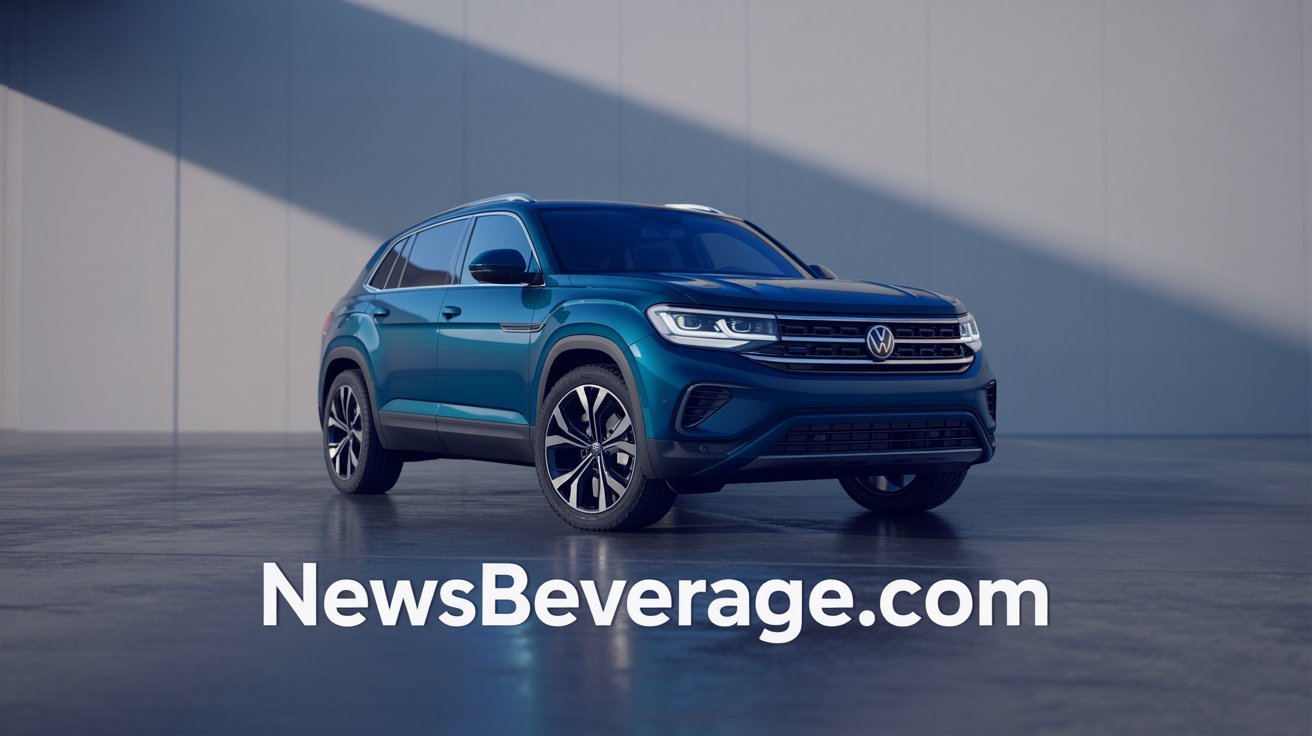
VW Atlas Cross Sport: The Ultimate Midsize SUV Worth Your Attention 2026
Introduction
You’ve probably noticed how crowded the three-row SUV market has become. Every automaker seems to have thrown their hat in the ring, promising space, comfort, and versatility. But what if you want something slightly different? Something that offers SUV practicality without feeling like you’re piloting a school bus through your neighborhood?
That’s where the VW Atlas Cross Sport enters the conversation. This five-seater takes the bones of Volkswagen’s popular Atlas and reshapes them into something sleeker and more dynamic. It’s designed for people who need substantial cargo space and comfortable seating but don’t necessarily need that third row.
In this article, we’ll walk through everything you need to know about the VW Atlas Cross Sport. You’ll learn about its design philosophy, performance capabilities, interior features, safety technology, and whether it makes sense for your lifestyle. By the end, you’ll have a clear picture of what this SUV brings to the table and how it stacks up against the competition.
What Makes the VW Atlas Cross Sport Different?
The Two-Row Advantage
The VW Atlas Cross Sport isn’t just a shorter Atlas. Volkswagen removed the third row and redesigned the rear profile to create a sportier silhouette. The roofline slopes downward more dramatically, giving it a coupe-like appearance that sets it apart from boxier competitors.
This design choice creates interesting trade-offs. You lose seating for two additional passengers, but you gain a more distinctive look and slightly better aerodynamics. The cargo area remains impressively spacious, offering 40.3 cubic feet behind the second row and 77.8 cubic feet with those seats folded down.
For families with one or two kids, or couples who prioritize cargo space over passenger capacity, this configuration makes perfect sense. You’re not constantly explaining to friends why you have empty seats in the back, and the vehicle feels appropriately sized for your actual needs.
Styling That Stands Out
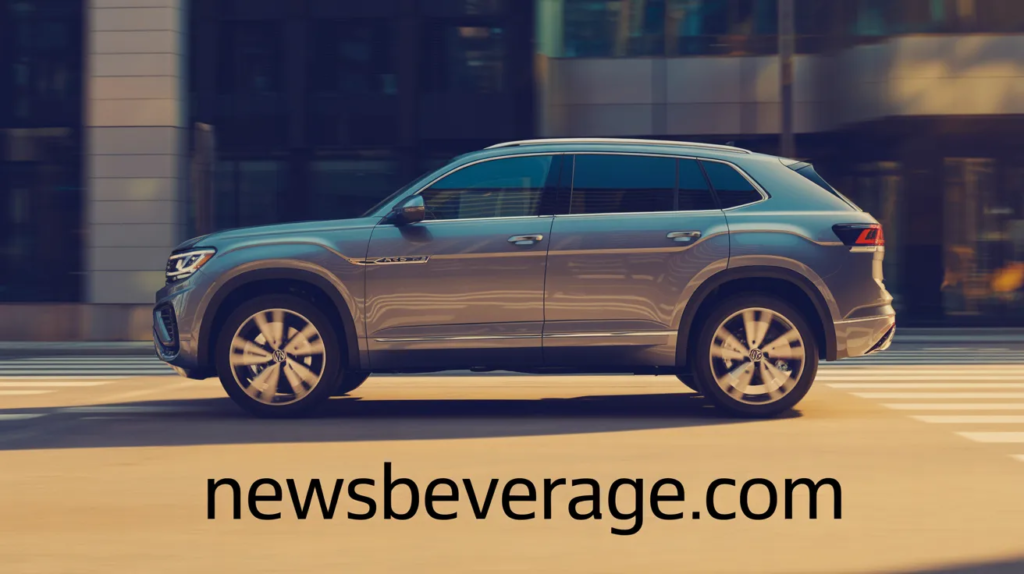
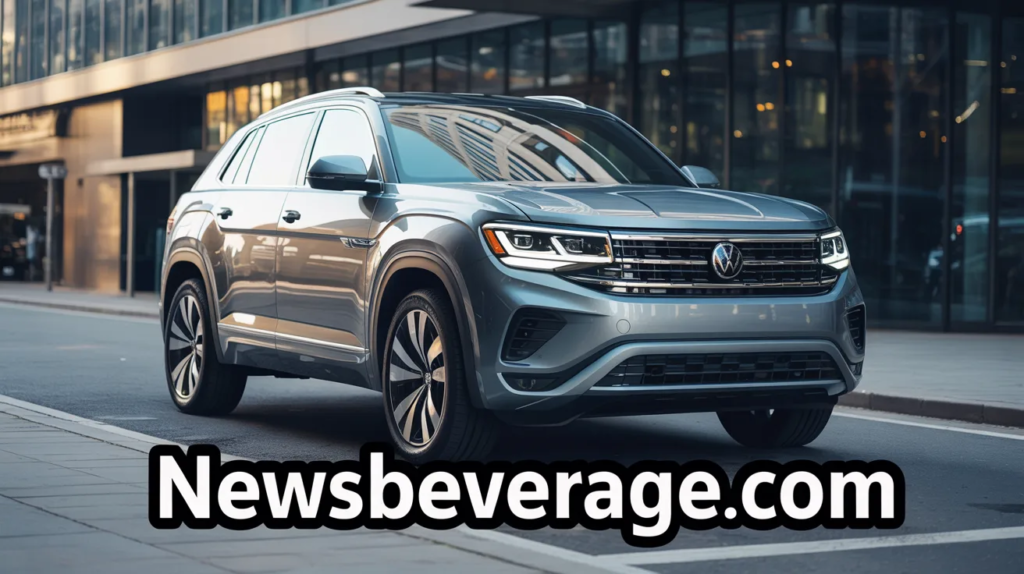
When you park the VW Atlas Cross Sport next to a standard Atlas, the differences become immediately apparent. The Cross Sport sits about six inches shorter in length and features more aggressive styling cues. The front grille carries Volkswagen’s contemporary design language with clean lines and integrated LED headlights.
The sloping rear roofline gives it a more dynamic stance. Some people love this look because it breaks away from the traditional boxy SUV formula. Others prefer the more upright design of the standard Atlas. Your preference here really comes down to whether you prioritize style or maximum cargo space.
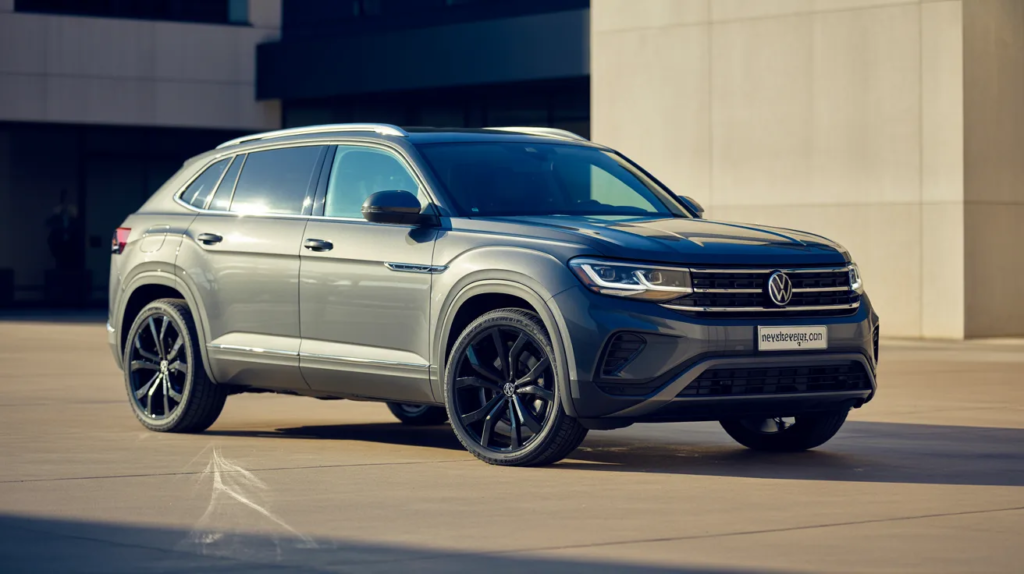
Volkswagen offers the Cross Sport in several trim levels, and higher trims add more distinctive exterior touches. You can get 20-inch or even 21-inch wheels on upper trims, which significantly enhance the vehicle’s road presence.
Performance and Powertrain Options
Engine Choices That Matter
The VW Atlas Cross Sport comes with two engine options. The base engine is a 2.0-liter turbocharged four-cylinder that produces 235 horsepower and 258 lb-ft of torque. This engine pairs with front-wheel drive as standard, though you can add Volkswagen’s 4Motion all-wheel-drive system.
For those wanting more power, there’s a 3.6-liter V6 engine generating 276 horsepower and 266 lb-ft of torque. This engine comes standard with 4Motion all-wheel drive and provides noticeably stronger acceleration. Both engines use an eight-speed automatic transmission.
I’ll be honest with you. The four-cylinder engine works fine for daily driving and commuting. It gets the job done and delivers better fuel economy. However, if you regularly have a full load of passengers and cargo, or if you plan to tow anything substantial, the V6 makes more sense.
How It Drives
The VW Atlas Cross Sport prioritizes comfort over sportiness, despite its name. The suspension soaks up bumps effectively, making it a pleasant companion on long highway drives. Steering feel is light and easy, which makes parking and low-speed maneuvering simple but doesn’t provide much feedback on curvy roads.
The vehicle feels stable and planted on the highway. Wind noise remains well-controlled even at higher speeds. Road noise depends somewhat on which tires come equipped on your particular trim level, but generally stays reasonable.
If you’re coming from a sedan or smaller crossover, you’ll notice the higher seating position immediately. Visibility is excellent in most directions, though the sloping rear roofline does create slightly larger blind spots compared to the standard Atlas. Thankfully, available blind-spot monitoring helps compensate for this.
The V6 model can tow up to 5,000 pounds when properly equipped. That’s enough for a small camper, a couple of jet skis, or a modest boat. The four-cylinder model offers a 2,000-pound towing capacity, which handles smaller trailers but not much more.
Interior Space and Comfort
Front Seat Experience
Climbing into the VW Atlas Cross Sport, you’ll find a spacious and well-appointed cabin. The front seats offer generous space for larger adults, and higher trim levels include power adjustment, heating, and ventilation. The driver’s seat position feels commanding without being too truck-like.
Materials quality varies by trim level. Base models use decent but unremarkable plastics and cloth upholstery. As you move up the trim ladder, you’ll encounter nicer soft-touch materials, leather seating surfaces, and more premium finishes. The top-trim models genuinely feel upscale and compete well with luxury-brand alternatives.
The dashboard layout follows Volkswagen’s clean and functional design philosophy. Physical buttons and knobs control climate functions, which I appreciate because they’re easier to use while driving than touchscreen controls. The overall aesthetic leans modern without trying too hard to be flashy.
Second-Row Comfort
The second row provides excellent space for adults. Legroom measures a generous 37.6 inches, which means even tall passengers can stretch out comfortably. The seats themselves offer good support and comfort for longer trips.
You’ll find dedicated climate vents for rear passengers, which helps keep everyone comfortable regardless of season. Higher trim levels add USB charging ports, which your passengers will definitely appreciate on road trips.
The second-row seats slide forward and backward, allowing you to prioritize passenger comfort or cargo space depending on your immediate needs. They also fold down easily to create that expansive cargo area we mentioned earlier.
Technology and Infotainment
Volkswagen equips the Atlas Cross Sport with a touchscreen infotainment system. Screen size varies by trim, with base models getting an 8-inch display and higher trims receiving a larger 10-inch screen. The system includes Apple CarPlay and Android Auto as standard features, which means you can easily integrate your smartphone.
The interface responds quickly to inputs and features logical menu structures. Some competitors offer flashier systems with more features, but Volkswagen’s approach emphasizes usability over gimmicks. Everything works reliably, and you won’t spend weeks figuring out how to change basic settings.
Available features include a digital cockpit that replaces traditional gauges with a customizable screen, a premium Fender audio system, wireless charging, and a panoramic sunroof. Navigation comes standard on higher trims or as an option on lower ones, though most people will probably just use their phone’s navigation through CarPlay or Android Auto anyway.
Safety Features and Ratings
Standard Safety Equipment
Volkswagen includes a solid suite of standard safety features across all VW Atlas Cross Sport models. Forward collision warning with automatic emergency braking comes standard, as does blind-spot monitoring with rear cross-traffic alert. You also get a rearview camera, though higher trims offer multiple camera views that make parking easier.
Available safety features include adaptive cruise control, lane-keeping assist, and traffic sign recognition. The adaptive cruise control works smoothly on highways and reduces fatigue during long drives. Lane-keeping assist provides gentle steering corrections to keep you centered in your lane.
Crash Test Performance
The VW Atlas Cross Sport has performed well in crash testing. The Insurance Institute for Highway Safety (IIHS) awarded it good ratings in most crash test categories. The National Highway Traffic Safety Administration (NHTSA) gave it a five-star overall safety rating.
These ratings should give you confidence that Volkswagen engineered the Cross Sport with crash protection as a priority. The vehicle’s structure, combined with its many airbags and safety systems, creates a protective environment for occupants.
Fuel Economy Considerations
Let’s talk about fuel consumption because it matters to your wallet. The four-cylinder VW Atlas Cross Sport with front-wheel drive achieves EPA estimates of 21 mpg city and 26 mpg highway. Adding all-wheel drive drops those numbers slightly to 19 mpg city and 25 mpg highway.
The V6 model returns 17 mpg city and 23 mpg highway. These aren’t spectacular numbers by modern standards, but they’re competitive for a midsize SUV of this size. If fuel economy ranks as your top priority, you might want to consider hybrid alternatives from other manufacturers.
In real-world driving, you’ll probably see numbers close to these estimates during normal mixed driving. Highway-heavy driving can exceed EPA highway numbers, while city-only driving might fall slightly short of the city rating.
Ownership Costs and Reliability
Pricing Structure
The VW Atlas Cross Sport starts around $35,000 for base models and can climb past $50,000 when fully loaded. This pricing positions it competitively within the midsize SUV segment. You’re paying less than luxury-branded alternatives while getting more features than some budget-focused competitors.
Value-conscious buyers should look closely at mid-level trims. These often offer the best balance of features and price without forcing you to pay for luxury touches you might not need.
Warranty Coverage
Volkswagen provides a four-year or 50,000-mile basic warranty and a six-year or 72,000-mile powertrain warranty. This coverage exceeds what many competitors offer and provides peace of mind during your early ownership years.
Maintenance costs remain reasonable for the class. Volkswagen doesn’t have the reputation for rock-bottom service costs that some Asian brands enjoy, but you won’t face the premium pricing associated with luxury marques either.
Long-Term Reliability
Volkswagen’s reliability record has improved significantly in recent years. The VW Atlas Cross Sport shares many components with the standard Atlas, which has proven reasonably dependable in owner reports. You shouldn’t expect problems significantly different from other midsize SUVs.
Regular maintenance helps ensure longevity. Follow Volkswagen’s recommended service schedule, and the Cross Sport should provide years of reliable transportation.
How It Compares to Key Competitors
Honda Pilot
The Honda Pilot offers three rows of seating, which gives it more passenger capacity than the VW Atlas Cross Sport. However, the Cross Sport counters with more distinctive styling and a slightly more upscale interior in comparable trims.
Honda has a stronger reputation for reliability, which matters to some buyers. The Pilot also offers better predicted resale values. However, the Cross Sport provides a more engaging design inside and out.
Ford Explorer
The Ford Explorer competes directly with the VW Atlas Cross Sport in size and capability. The Explorer offers more powerful engine options, including a turbocharged four-cylinder and a V6 that outmuscles Volkswagen’s offerings.
However, the Cross Sport’s interior feels more thoughtfully designed, and its technology interface proves easier to use than Ford’s SYNC system. The decision between these two often comes down to brand preference and which dealership experience you prefer.
Nissan Murano
The Nissan Murano matches the VW Atlas Cross Sport’s two-row configuration and emphasizes style over maximum utility. The Murano costs less initially and has a strong reputation for reliability.
However, the Cross Sport offers more cargo space, more powerful engine options, and a more modern interior design. The Murano appeals to buyers prioritizing value and proven dependability, while the Cross Sport attracts those wanting more space and contemporary features.
Who Should Buy the VW Atlas Cross Sport?
This vehicle makes the most sense for specific buyer profiles. If you’re a small family that needs SUV space but doesn’t require three rows of seats, the Cross Sport deserves serious consideration. The same applies if you’re empty nesters who want comfortable road trip capability without excess vehicle.
People who prioritize distinctive styling over maximum practicality will appreciate how the Cross Sport looks compared to boxier alternatives. If you regularly haul large items but rarely transport more than four people, this configuration works perfectly.
The VW Atlas Cross Sport also appeals to brand-loyal Volkswagen customers who want something larger than a Tiguan but more stylish than a standard Atlas. It fills a specific niche in Volkswagen’s lineup and does so effectively.
Potential Drawbacks to Consider
No vehicle is perfect, and the VW Atlas Cross Sport has some limitations worth acknowledging. The sloping roofline that creates its distinctive look also reduces cargo capacity compared to the standard Atlas. If you regularly need maximum cargo space, the regular Atlas makes more sense.
Fuel economy lags behind some competitors, particularly those offering hybrid powertrains. If minimizing fuel costs ranks as a top priority, you’ll find more efficient options elsewhere.
The four-cylinder engine, while adequate, feels somewhat strained when the vehicle is fully loaded. If you can afford it, the V6 provides a noticeably better driving experience.
Resale values don’t match what Honda and Toyota products typically command. This matters if you plan to sell or trade the vehicle after a few years.
Final Thoughts
The VW Atlas Cross Sport carves out an interesting space in the competitive midsize SUV market. It offers the practicality and space of a three-row SUV in a package that looks more distinctive and feels more manageable in daily use.
You give up passenger capacity compared to the standard Atlas, but you gain styling personality and a vehicle that feels appropriately sized for many families’ actual needs. The interior provides genuine comfort and space, while the technology features keep pace with modern expectations.
Performance proves adequate with the four-cylinder engine and notably better with the V6. Safety features inspire confidence, and the overall driving experience emphasizes comfort over sportiness despite the “Sport” name.
Is the VW Atlas Cross Sport perfect? No vehicle is. However, for buyers who value its particular combination of style, space, and features, it represents a compelling choice that deserves serious consideration.
Have you test-driven the VW Atlas Cross Sport? What aspects matter most to you when shopping for a midsize SUV? Your priorities will ultimately determine whether this Volkswagen belongs in your driveway.
Frequently Asked Questions
How many people can the VW Atlas Cross Sport seat?
The VW Atlas Cross Sport seats five people comfortably across two rows. Unlike the standard Atlas, it doesn’t offer a third row. This configuration provides excellent space for passengers while maximizing cargo area behind the second row.
What’s the difference between the Atlas and Atlas Cross Sport?
The Atlas Cross Sport is shorter and lacks the third-row seating found in the standard Atlas. It features a sportier, sloping roofline and slightly reduced cargo capacity. The Cross Sport emphasizes style and a more compact footprint while maintaining generous space for five passengers.
Is the VW Atlas Cross Sport good in snow?
With the available 4Motion all-wheel-drive system, the VW Atlas Cross Sport handles snow and winter conditions well. The system distributes power effectively to maintain traction. Ground clearance of 8 inches helps navigate through deeper snow, making it a solid choice for winter driving.
What is the towing capacity of the VW Atlas Cross Sport?
The V6 engine model can tow up to 5,000 pounds when properly equipped. The four-cylinder engine variant offers a 2,000-pound towing capacity. These numbers make it suitable for towing small campers, boats, or trailers, though larger three-row SUVs may offer higher capacities.
Does the VW Atlas Cross Sport require premium fuel?
No, both engine options in the VW Atlas Cross Sport run on regular unleaded gasoline. You don’t need to use premium fuel, which helps keep operating costs reasonable. This differs from some competitors that recommend or require higher-octane fuel for optimal performance.
How reliable is the VW Atlas Cross Sport?
The VW Atlas Cross Sport shows average to above-average reliability for its class. Volkswagen’s recent models have demonstrated improved dependability compared to earlier years. Following the recommended maintenance schedule helps ensure long-term reliability and minimize unexpected repairs.
What is the cargo space in the VW Atlas Cross Sport?
Behind the second row, you get 40.3 cubic feet of cargo space. Folding the second-row seats down expands capacity to 77.8 cubic feet. This provides substantial room for luggage, sports equipment, or home improvement supplies, though it’s less than the standard Atlas offers.
Does the VW Atlas Cross Sport come with all-wheel drive?
All-wheel drive is available across the VW Atlas Cross Sport lineup. The four-cylinder engine comes with front-wheel drive as standard, with 4Motion AWD available as an option. The V6 engine includes 4Motion all-wheel drive as standard equipment.
What safety features are standard on the VW Atlas Cross Sport?
Standard safety features include forward collision warning, automatic emergency braking, blind-spot monitoring, and rear cross-traffic alert. A rearview camera also comes standard. Higher trims add features like adaptive cruise control, lane-keeping assist, and multiple camera views for easier parking.
How does the VW Atlas Cross Sport compare to the Honda Passport?
Both are two-row midsize SUVs with similar dimensions and capabilities. The Honda Passport typically offers better predicted reliability and resale value. The VW Atlas Cross Sport counters with a more modern interior design, easier-to-use technology, and often more competitive pricing in comparable trims.
Also Read : Nicki Minaj Tour