Early signs Hand Foot and Mouth Day by Day: Essential Early Warning Signs Every Parent Must Know 2026
Introduction
You notice your toddler rubbing their mouth and refusing breakfast. By lunchtime, they’re cranky and running a slight fever. Is it teething? A cold? Or could it be hand foot and mouth disease?
Hand foot and mouth day by day progression can catch parents off guard. One moment your child seems fine, and the next, they’re covered in spots and absolutely miserable. Understanding the early signs hand foot and mouth day by day can help you respond quickly, ease your child’s discomfort, and know exactly what to expect as the illness unfolds.
In this guide, we’ll walk through hand foot and mouth disease from the very first symptoms to complete recovery. You’ll learn what happens each day, how to spot the warning signs early, and practical tips to help your little one feel better faster. Whether you’re dealing with your first case or your third, this day-by-day breakdown will give you the confidence to navigate this common childhood illness.
What Is Hand Foot and Mouth Disease?
Hand foot and mouth disease (HFMD) is a viral infection common in children under 5 years old. It’s caused primarily by coxsackievirus A16 and enterovirus 71.
The illness spreads easily in daycares, preschools, and playgroups. Your child can catch it through contact with saliva, fluid from blisters, or respiratory droplets when someone coughs or sneezes.
While hand foot and mouth disease sounds alarming, it’s usually mild. Most children recover within 7-10 days without complications. However, knowing the early signs hand foot and mouth day by day helps you prepare and respond appropriately.
The disease gets its name from the characteristic rash that appears on the hands, feet, and mouth. But symptoms don’t appear all at once—they develop gradually over several days.
Before Symptoms Appear: The Incubation Period
Before you notice any signs, the virus is already working inside your child’s body.
The incubation period for hand foot and mouth disease typically lasts 3-6 days after exposure. During this time, your child feels completely normal. They’re eating, playing, and sleeping as usual.
Here’s what’s happening behind the scenes:
- The virus enters through the mouth or respiratory tract
- It begins multiplying in the throat and intestinal tract
- Your child becomes contagious before showing symptoms
- They can spread the virus without anyone knowing
This silent period makes hand foot and mouth disease tricky. Your child might have been exposed at daycare days before you see the first symptom.
Day 1: The Very First Signs
Hand foot and mouth day by day begins subtly. Day 1 often looks like the start of a common cold or flu.
Morning symptoms:
Your child might wake up slightly irritable or tired. They may complain their throat hurts or refuse certain foods. The fever typically starts now, ranging from 100°F to 103°F (37.8°C to 39.4°C).
What you’ll notice:
- Low-grade fever developing
- Decreased appetite
- Mild sore throat
- General fussiness or lethargy
- Possible runny nose
Many parents don’t suspect hand foot and mouth disease at this stage. It genuinely resembles a regular viral infection. I’ve learned that paying attention to your child’s eating habits provides early clues—especially if they suddenly refuse foods they normally love.
What to do:
Keep your child hydrated. Offer cool drinks and soft foods. Monitor the fever with age-appropriate pain relievers if your pediatrician recommends them. Start watching for additional symptoms.
Day 2: Mouth Sores Begin to Develop
By day 2, hand foot and mouth disease reveals more specific symptoms.
The telltale mouth sores:
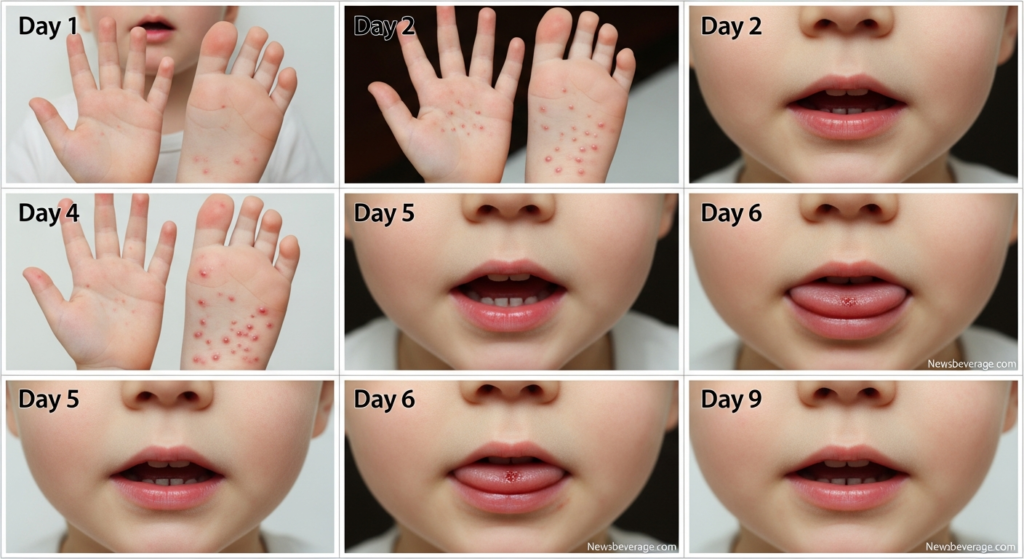
Small red spots appear inside the mouth, typically on the tongue, gums, and inner cheeks. Within hours, these spots develop into painful ulcers. Your child will likely become more uncomfortable now.
Eating becomes difficult:
- Refusing to eat or drink
- Drooling more than usual
- Crying during meals
- Pointing to their mouth in pain
- Preferring only cold or soft foods
The fever may continue or even spike higher. Your child’s discomfort increases significantly because mouth sores make swallowing painful.
Early signs hand foot and mouth day by day:
At this point, you might still be unsure. The mouth sores could resemble thrush or canker sores. But combined with the fever from day 1, hand foot and mouth disease becomes more likely.
Hydration is critical:
Offer ice pops, cold water, or smoothies. Avoid acidic or salty foods that irritate the sores. Keep your child comfortable and watch for the characteristic rash that typically appears next.
Day 3: The Rash Appears
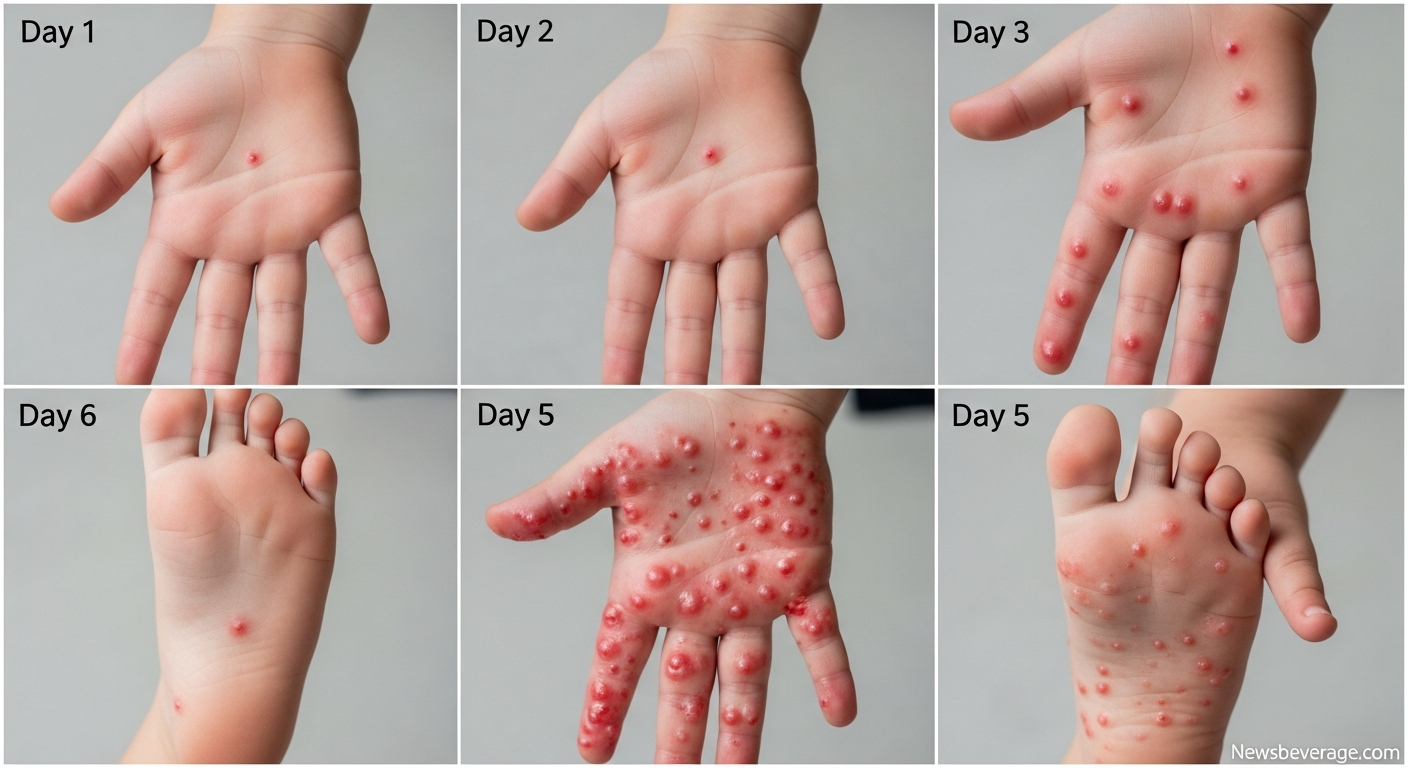
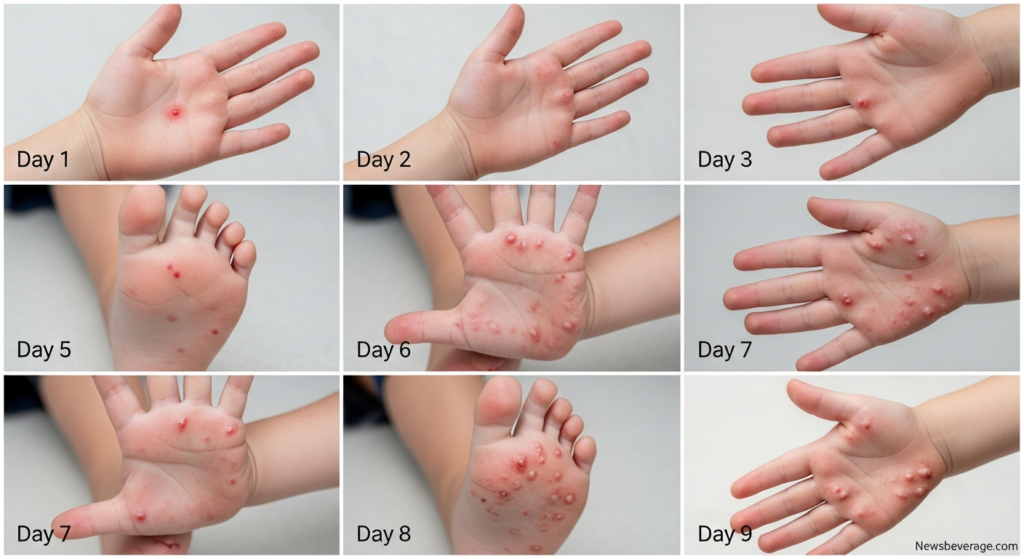
Day 3 marks a turning point in hand foot and mouth day by day progression. The distinctive rash finally appears.
Where the rash shows up:
- Palms of the hands
- Soles of the feet
- Sometimes on buttocks or genital area
- Occasionally on knees and elbows
What the rash looks like:
The spots start as small red dots or bumps. They quickly develop into fluid-filled blisters. Unlike chickenpox, these blisters typically don’t itch. They may feel tender or painful when touched.
Your child might walk differently if blisters on their feet hurt. They may refuse to hold objects or crawl if their hands are affected.
Confirming the diagnosis:
Once you see the combination of mouth sores and the hand-foot rash, hand foot and mouth disease becomes obvious. This is when most parents call the pediatrician or realize what they’re dealing with.
Peak discomfort:
Day 3 is often the worst day. Your child has mouth pain, a rash, and lingering fever. They’re miserable, tired, and want constant comfort.
Your role:
Continue offering fluids frequently. Cool baths can soothe the skin rash. Keep fingernails trimmed to prevent scratching. Use soft clothing that doesn’t rub against blisters.
Days 4-5: The Peak of Symptoms
During days 4-5, hand foot and mouth disease symptoms reach their maximum intensity.
What to expect:
- Fever may finally break or decrease
- Mouth sores remain very painful
- Rash may spread or become more pronounced
- Blisters on hands and feet are fully developed
- Your child remains contagious
Sleep disruptions:
Nighttime can be particularly challenging. The discomfort from mouth sores and blisters disrupts sleep. Your child may wake frequently needing comfort or pain relief.
Eating strategies:
- Cold yogurt or applesauce
- Smoothies with soft fruits
- Lukewarm broth
- Ice cream or frozen fruit bars
- Avoid spicy, salty, or acidic foods
We found that using a straw sometimes helps because it bypasses the worst sores. Some children prefer eating with a spoon from the side of their mouth.
Managing pain:
Ask your pediatrician about appropriate pain medications. Some doctors recommend coating solutions for mouth sores. Cool compresses on hands and feet provide temporary relief.
Hand foot and mouth day by day monitoring:
Watch for signs of dehydration, especially if your child refuses to drink. Look for decreased urination, dry lips, or extreme lethargy. These require immediate medical attention.
Days 6-7: The Turning Point
Good news arrives around days 6-7 of hand foot and mouth day by day progression. Your child finally starts improving.
Positive changes:
- Fever is completely gone
- Mouth sores begin healing
- Appetite slowly returns
- Energy levels increase
- Mood improves
The blisters change:
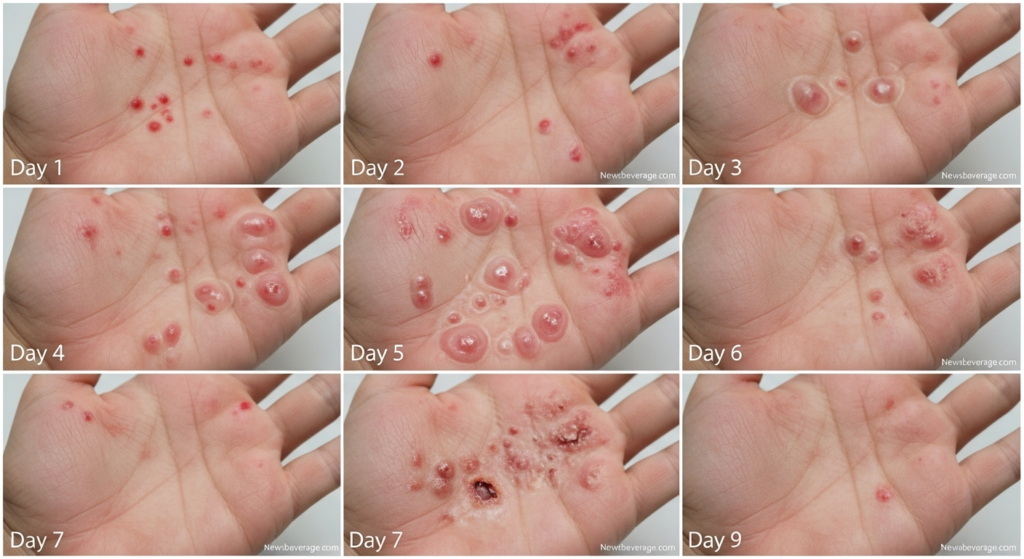
The fluid-filled blisters start drying out. They may form crusts or begin peeling. This is a normal part of healing, not a cause for concern.
Your child feels better:
They’re more willing to eat and drink. Playing might resume, though they still tire easily. Sleep improves as discomfort decreases.
Still contagious:
Even though symptoms improve, your child remains contagious. The virus sheds in stool for several weeks after recovery. Maintain strict handwashing and hygiene practices.
Returning to normal activities:
Most schools and daycares allow children to return once the fever is gone for 24 hours and they’re eating and drinking normally. Check your facility’s specific policies about hand foot and mouth disease.
Days 8-10: Recovery and Healing
The final phase of hand foot and mouth day by day brings relief and recovery.
Physical healing:
- Mouth sores completely heal
- Blisters on hands and feet dry up
- Peeling skin on palms and soles begins
- Energy fully returns
- Appetite normalizes
The peeling phase:
Don’t be alarmed when your child’s hands and feet start peeling. This happens 1-2 weeks after the initial rash. The skin peels in sheets, especially on the palms and soles. It’s painless and resolves on its own.
Nail changes:
Some children develop horizontal lines across their nails or experience nail shedding weeks later. This happens in about 20% of hand foot and mouth cases. New nails grow back normally.
Immunity considerations:
After recovering from one strain of the virus, your child has immunity to that specific strain. However, multiple viruses cause hand foot and mouth disease. Your child could get it again from a different strain.
Recognizing Early Warning Signs: A Quick Reference
Understanding early signs hand foot and mouth day by day helps you act fast.
Call your pediatrician if you notice:
- Fever with no obvious cause
- Sudden refusal to eat or drink
- Complaints of mouth or throat pain
- Red spots inside the mouth
- Unusual crankiness or lethargy
- Combination of fever and oral discomfort
Why early recognition matters:
Identifying hand foot and mouth disease early allows you to:
- Keep your child comfortable from the start
- Prevent dehydration before it becomes serious
- Avoid exposing other children
- Prepare for the week ahead
Watch siblings closely:
If one child has hand foot and mouth disease, siblings often develop symptoms 3-6 days later. The incubation period means you might face multiple rounds of illness in your household.
When to Seek Medical Attention
Most hand foot and mouth day by day cases resolve without medical intervention. However, certain situations require professional care.
Contact your doctor immediately if:
- Fever exceeds 104°F (40°C)
- Your child shows signs of dehydration (no urination for 8+ hours, dry mouth, no tears)
- Mouth sores prevent all drinking
- Severe headache or neck stiffness develops
- Your child seems extremely lethargic or unresponsive
- Symptoms worsen after day 5
- Breathing difficulties occur
High-risk situations:
Children under 6 months, those with weakened immune systems, or kids with existing health conditions need closer monitoring. Enterovirus 71 occasionally causes serious complications, though this is rare.
Hospital care might include:
- IV fluids for dehydration
- Stronger pain management
- Monitoring for complications
- Treatment for secondary infections
Trust your parental instincts. If something feels wrong, don’t hesitate to seek medical advice.
Preventing the Spread of Hand Foot and Mouth Disease
Hand foot and mouth disease spreads incredibly easily. Prevention requires diligent hygiene.
Essential prevention steps:
- Wash hands thoroughly and frequently
- Disinfect toys, doorknobs, and surfaces daily
- Avoid sharing cups, utensils, or food
- Keep infected children home from school/daycare
- Change diapers in designated areas
- Dispose of tissues immediately
Handwashing technique:
Wash with soap and water for at least 20 seconds. Pay special attention after diaper changes, before eating, and after touching the infected child. Hand sanitizer doesn’t kill all viruses that cause hand foot and mouth disease—soap and water work best.
Bleach solution:
Mix 1 tablespoon of bleach with 4 cups of water to disinfect surfaces. The virus survives on surfaces for hours or even days.
Adult precautions:
Adults can contract hand foot and mouth disease too. It’s less common but possible. Practice the same hygiene measures, especially if you’re pregnant or have compromised immunity.
Caring for Your Child: Practical Comfort Tips
Managing hand foot and mouth day by day symptoms requires patience and creativity.
Food ideas:
- Mashed potatoes with butter
- Macaroni and cheese (cooled)
- Scrambled eggs
- Oatmeal with honey (for children over 1 year)
- Cottage cheese
- Pudding or custard
- Cold fruit purees
Beverage options:
- Water with a straw
- Milk (cold)
- Non-acidic juices diluted with water
- Coconut water
- Herbal tea (cooled)
- Electrolyte solutions
Pain relief methods:
- Cool mist humidifier in the bedroom
- Cool compresses on blistered areas
- Soft, loose clothing
- Saltwater rinses for older children (they can gargle and spit)
- Distraction with favorite shows or quiet activities
Emotional support:
Your child needs extra cuddles, patience, and understanding. They don’t understand why they feel so bad. Reassurance and comfort matter as much as physical treatments.
What About Siblings and Other Family Members?
When one child gets hand foot and mouth disease, you’re likely wondering about the rest of your family.
Sibling risk:
Siblings under 10 have the highest risk of catching hand foot and mouth disease. Close quarters and shared toys make transmission almost inevitable.
Timing:
If siblings get infected, symptoms typically appear 3-6 days after the first child shows signs. You might manage multiple sick children at staggered intervals.
Isolation strategies:
While complete isolation isn’t practical, you can take steps:
- Separate sleeping areas if possible
- Assign specific toys to each child
- Increase handwashing frequency
- Disinfect common areas multiple times daily
Adult infections:
Adults with strong immune systems usually don’t get hand foot and mouth disease. However, stressed or immunocompromised adults can contract it. Adult symptoms often feel like a flu with a rash.
Pregnant women:
If you’re pregnant and exposed, contact your obstetrician. While rarely serious, infections late in pregnancy require monitoring.
Common Myths About Hand Foot and Mouth Disease
Let’s clear up misconceptions about hand foot and mouth day by day progression.
Myth 1: It’s the same as hoof and mouth disease in animals
False. These are completely different diseases. Hand foot and mouth disease only affects humans. Hoof and mouth disease affects livestock.
Myth 2: You can get it from animals
No. Hand foot and mouth disease spreads person-to-person only.
Myth 3: It only happens in summer
While more common in summer and fall, hand foot and mouth disease occurs year-round.
Myth 4: Once you’ve had it, you can’t get it again
Not true. Multiple virus strains cause hand foot and mouth disease. Having one strain doesn’t protect against others.
Myth 5: The rash always appears on hands and feet
Sometimes the rash is minimal or appears only in the mouth or on the buttocks.
Myth 6: Antibiotics will help
Hand foot and mouth disease is viral. Antibiotics treat bacterial infections, not viral ones.
Long-Term Outlook and Complications
Understanding hand foot and mouth day by day includes knowing what happens after recovery.
Most children:
- Recover completely within 7-10 days
- Experience no lasting effects
- Return to normal activities quickly
- Develop immunity to that virus strain
Rare complications:
- Viral meningitis (inflammation of brain/spinal cord membranes)
- Encephalitis (brain inflammation)
- Myocarditis (heart muscle inflammation)
- Nail loss or changes weeks later
- Persistent mouth sores in immunocompromised children
These complications are extremely rare. Most hand foot and mouth cases are uncomfortable but not dangerous.
Nail changes:
About 1-2 months after recovery, some children lose fingernails or toenails. This looks alarming but is harmless. New nails grow normally. Scientists believe it happens when the virus temporarily disrupts nail growth.
Follow-up care:
Most children don’t need follow-up appointments. Schedule one if symptoms persist beyond 10 days, complications develop, or you have ongoing concerns.
Conclusion
Understanding hand foot and mouth day by day empowers you to care for your sick child confidently. From the first subtle fever on day 1 through the characteristic rash on day 3 to complete recovery by day 10, you now know what to expect.
The early signs hand foot and mouth day by day—fever, mouth pain, and decreased appetite—might seem minor at first. But recognizing them quickly helps you prepare for the challenging middle days and provide the best comfort care possible.
Remember, hand foot and mouth disease is incredibly common in childhood. Almost every parent faces it eventually. You’re not alone in dealing with this frustrating illness. With patience, proper hydration, pain management, and lots of cuddles, your child will recover fully.
Have you dealt with hand foot and mouth disease in your family? What comfort strategies worked best for your child? Share your experiences in the comments to help other parents navigating this illness.
FAQs
How early can you detect hand foot and mouth disease?
The earliest sign is usually fever combined with decreased appetite, appearing 3-6 days after exposure. Mouth sores develop 1-2 days after the fever starts. The characteristic rash on hands and feet typically appears on day 3.
Can hand foot and mouth disease be prevented with a vaccine?
No vaccine currently exists for hand foot and mouth disease in the United States. Prevention relies on good hygiene practices, including frequent handwashing and disinfecting surfaces.
How long is a child contagious with hand foot and mouth disease?
Children are most contagious during the first week of illness. However, the virus sheds in stool for several weeks after symptoms resolve. Maintain hygiene practices for at least two weeks after recovery.
Do all children with hand foot and mouth disease get a fever?
Most children develop a fever, but not all. Some cases present with only mouth sores or only the rash. The classic presentation includes fever, mouth sores, and the hand-foot rash, but variations occur.
Is hand foot and mouth disease worse for adults than children?
When adults contract hand foot and mouth disease, symptoms can be more severe. However, adults less commonly get infected due to previous exposures building immunity.
Can you go to daycare with hand foot and mouth disease?
Most daycares require children to stay home until they’re fever-free for 24 hours without medication and can eat and drink normally. Check your facility’s specific exclusion policies.
What’s the difference between hand foot and mouth disease and chickenpox?
Hand foot and mouth disease causes blisters primarily on hands, feet, and in the mouth. Chickenpox causes itchy blisters all over the body. Hand foot and mouth blisters typically don’t itch.
Should you pop the blisters from hand foot and mouth disease?
Never pop the blisters. This increases infection risk and spreads the virus. Let them heal naturally.
Can you take a bath with hand foot and mouth disease?
Yes, cool baths can soothe the skin. Just ensure you disinfect the tub afterward and don’t share bathwater with uninfected siblings.
What foods should you avoid with hand foot and mouth disease?
Avoid acidic foods (citrus, tomatoes), salty foods (chips, crackers), spicy foods, and hard or crunchy textures. Stick with cool, soft, bland foods that don’t irritate mouth sores.
Also Read : The Sure Thing