The Ultimate On-Page SEO Checklist for 2026
Understanding On-Page SEO
On-page SEO Checklist refers to the practice of optimizing individual web pages in order to rank higher and earn more relevant traffic in search engines. It encompasses a range of strategies that ensure your website is effective not only in attracting visitors but also in keeping them engaged. At its core, on-page SEO focuses on both the content and the HTML source code of a page.
Central to on-page SEO is the use of keywords. Keywords are the terms and phrases that potential visitors enter into search engines when looking for information or services. Integrating relevant keywords into your content—especially in titles, headers, and meta descriptions—improves its visibility and helps search engines understand the context of the page. However, it is important to use keywords judiciously to avoid keyword stuffing, which can negatively impact user experience and lead to penalties from search engines.
Another essential component of on-page SEO Checklist is the use of internal links. Internal links connect various pages within your website, enhancing navigation and ensuring that search engines can crawl your site effectively. They help in spreading link equity throughout the website, thus improving the authority of all linked pages. Additionally, a well-structured internal linking strategy can assist visitors in discovering more content, thereby increasing engagement and reducing bounce rates.
Content quality plays a vital role in on-page SEO as well. Search engines prioritize high-quality, informative, and engaging content that provides genuine value to users. Creating relevant content that addresses users’ needs fosters trust and encourages visitors to return to your site. Furthermore, appropriate HTML tags, such as title tags and header tags, are necessary for signaling the importance of various elements on your page, thus aiding both search engines and users in navigation.
Key Elements of the 2026 On-Page SEO Checklist
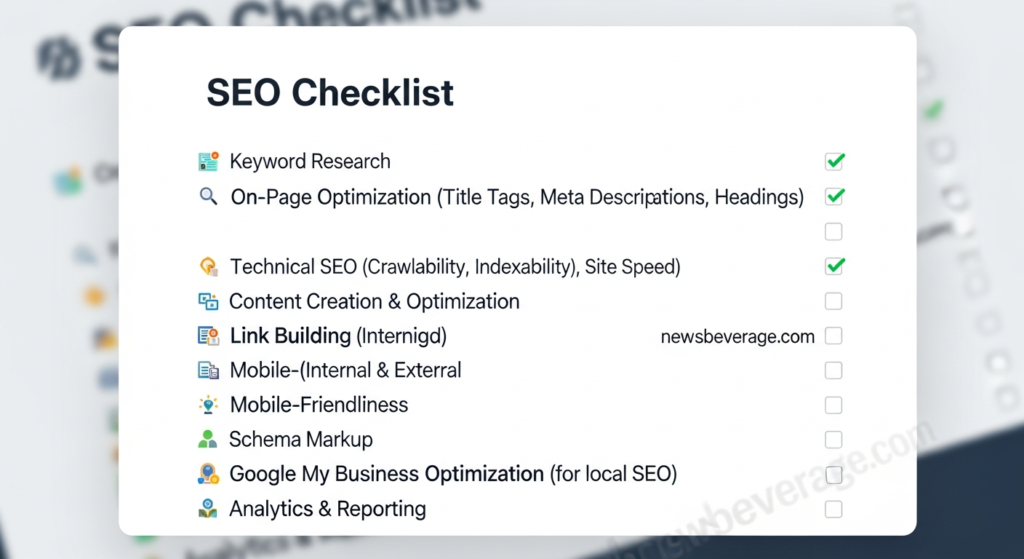
The landscape of search engine optimization is constantly evolving, and understanding the key elements of effective on-page SEO in 2026 is crucial for maintaining a competitive edge. This checklist encompasses several essential components that contribute to enhanced visibility and user engagement.
First and foremost, keyword optimization remains a fundamental aspect. It is advisable to perform thorough keyword research to identify relevant terms and phrases that align with user intent. Not only should the primary keyword be strategically placed in the title and throughout the content, but using synonyms and related terms can enrich the text and improve readability while catering to various search queries.
Meta tags play a vital role in on-page SEO as they provide search engines with information about your content. The title tag should be succinct yet descriptive, ideally containing the focus keyword to improve ranking potential. Additionally, the meta description serves as a brief summary of the page’s content that can influence click-through rates. Crafting compelling meta descriptions with effective wording can enhance visibility and clickability in search results.
Attention should also be given to header tags (H1, H2, H3) as they outline the content structure. The H1 tag should represent the main title of the page and include the primary keyword. Following this, using H2 and H3 tags to organize subsections not only aids user navigation but also helps search engines understand the context of the content.
Another critical element is content structure. Clear, concise, and well-organized content is essential for retaining reader interest and ensuring that information is easily digestible. Utilizing bullet points, numbered lists, and short paragraphs can facilitate better engagement and readability.
Lastly, image optimization is often overlooked but is equally important. All images should have descriptive file names and alt attributes that contain relevant keywords, which can enhance accessibility and improve SEO performance.
Common Mistakes to Avoid in On-Page SEO
On-page SEO is crucial for improving website visibility and performance, yet many webmasters and content creators often fall into common traps that can hinder their optimization efforts. One prevalent mistake is keyword stuffing, where individuals try to enhance their rankings by overusing specific keywords within their content. This practice not only leads to poor readability but can also be penalized by search engines, ultimately damaging your site’s credibility.
Another significant oversight is neglecting mobile optimization. With an increasing number of users accessing the web via mobile devices, ensuring that your site is mobile-friendly is essential for enhancing user experience. Failing to adopt responsive design can result in higher bounce rates, directly impacting your search engine rankings.
Additionally, many content creators overlook the importance of meta descriptions. Meta descriptions play a vital role in attracting clicks from search engine results pages. A well-crafted meta description not only summarizes the page content effectively but also encourages users to engage with the link. Neglecting this element may lead to lower click-through rates and missed traffic opportunities.
Finally, failing to update content regularly can significantly affect your on-page SEO strategy. Search engines favor fresh, relevant content, and outdated pages may drop in rankings. Regularly updating your existing content ensures that it remains valuable and aligned with current information, helping maintain its relevance in search results.
In conclusion, by avoiding these common mistakes, webmasters can greatly enhance their on-page SEO strategies, leading to improved site performance, better user experience, and ultimately, higher search engine rankings.
Future Trends in On-Page SEO for 2026 and Beyond
As we look forward to 2026 and beyond, it is imperative to understand the emerging trends and technologies poised to influence on-page SEO strategies. One of the most significant advancements is the integration of artificial intelligence (AI) and machine learning in content creation. These technologies enable marketers to analyze vast amounts of data, enhancing the ability to tailor content to meet user intent more effectively. Understanding user behavior through AI will help in creating more relevant, engaging, and valuable content for target audiences.
Additionally, voice search optimization is gaining momentum and will continue to shape on-page SEO practices. As technologies like smart speakers and voice-activated assistants become ubiquitous, search queries are shifting towards natural language and conversational phrases. This evolution necessitates that website content be restructured to accommodate long-tail keywords and FAQs that align with typical voice search patterns. Optimizing content for voice search will not only enhance visibility but also improve user experience by providing succinct answers to direct queries.
A further consideration in this evolving landscape is the growing importance of user experience (UX) signals. Factors such as page load speed, mobile-friendliness, and overall design elements are now critical ranking signals for search engines. Websites that prioritize delivering a seamless and engaging user experience are likely to rank higher in search results. Future on-page SEO strategies must be designed with the user in mind, focusing on navigability, accessibility, and interaction to comply with search engine algorithms that increasingly favor high-quality user experiences.
In conclusion, staying abreast of these trends will be crucial for marketers aiming to refine their on-page SEO strategies in the coming years. Adapting to advancements in AI, preparing for the shift towards voice search, and enhancing user experience will be vital components for maintaining a competitive edge in the digital marketplace.