Understanding the Sad Emoji: More Than Just a Frown 2026
Introduction to Emojis
Emojis are small digital images or icons that represent an idea, emotion, or concept, playing a significant role in the evolution of online communication. Originally developed in the late 1990s in Japan, emojis were designed to add emotional nuance to text-based communications, often allowing users to convey feelings that words alone might fail to express. The term ‘emoji’ is derived from the Japanese words ‘e’ (picture) and ‘moji’ (character), illustrating the visual nature of these symbols.
Over the years, the use of emojis has become ubiquitous in various forms of digital interaction, from social media platforms to text messaging. They facilitate a more engaging conversational experience, as they can quickly illustrate feelings or reactions that might otherwise take multiple words to explain. Among the vast array of available emojis, the sad emoji holds a prominent place, symbolizing feelings of sorrow, disappointment, or empathy. This particular emoji, which typically represents a frowning face with downturned eyes, serves to express a wide range of negative emotions in a visually accessible manner.
The significance of the sad emoji lies not only in its ability to convey sadness but also in its role within cultural and societal conversations. As digital communication continues to surge, understanding the implications of emojis—including the sad emoji—becomes increasingly important. The sad emoji is frequently used to convey personal experiences of sadness or to express sympathy towards others, thus enriching the emotional depth of discussions.
In this context, emojis serve as a bridge, connecting individuals through shared feelings and experiences. The recognition of the sad emoji and its many interpretations highlights how visual symbols can deeply impact and enhance communication, shaping the way we connect and relate to one another in an increasingly digitized world.
What is the Sad Emoji?
The sad emoji, commonly depicted as a yellow face with downturned mouth and frowning eyes, serves as a poignant representation of feelings such as sadness, sorrow, and disappointment. Embraced by users globally, its primary function is to express emotional distress in digital communication. Over time, this emoji has evolved significantly, both in design and usage, across various platforms.
Initially introduced in the late 1990s, the sad emoji has undergone numerous revisions. Each platform—from Apple’s iOS to Google’s Android—offers its unique interpretation, leading to variations in color shades, facial expressions, and additional features. For instance, while Apple displays a simple yellow face, platforms like Samsung and Microsoft adapt this representation to match their design aesthetics, sometimes incorporating tears or a drooping face.
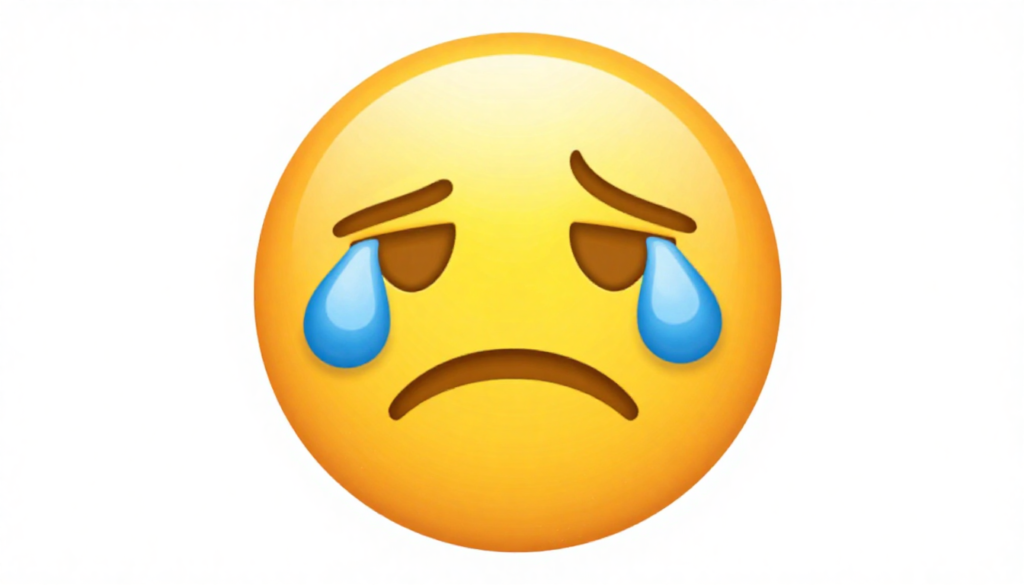
The Unicode Consortium standardizes the sad emoji, assigning it the code point U+1F622. This essential code allows consistency and recognition across all devices and applications. Furthermore, the establishment of Unicode has led to the introduction of related emojis that convey different levels of sadness, such as the crying emoji and the pensive face emoji. These additional options enable users to express their emotions more distinctly, providing a layered approach to digital emotional expression.
In today’s digital landscape, the sad emoji’s versatility continues to resonate through social media and messaging apps, making it a widely utilized icon to communicate feelings that words may not adequately describe. As users become more attuned to emotional nuances, the sad emoji remains an integral part of our daily conversations, illustrating not just a simple frown, but a complex layer of human experience conveyed in digital form.
The Psychological Impact of the Sad Emoji
Within the realm of digital communication, emojis serve as a vital tool in conveying complex emotions succinctly. The sad emoji, specifically, encapsulates feelings of sorrow, disappointment, or despair. By utilizing this particular icon, individuals can express their emotional state in a manner that transcends traditional text-based messaging, allowing for more nuanced interactions. The psychological impact of this emoticon can be significant, serving as a catalyst for emotional understanding in social exchanges.
Research indicates that the sad emoji can foster empathy among users. When recipients encounter a message accompanied by this icon, they may respond with increased compassion or concern, reflecting an innate human desire to connect and support one another during moments of sadness. This empathetic engagement may alleviate feelings of isolation for the sender, reinforcing the emotional bonds that digital interactions can create.
Moreover, engaging with the sad emoji can have implications for mental health awareness. By openly using such symbols, individuals may feel more comfortable discussing their challenges, thereby promoting healthier conversations about emotional well-being. The integration of the sad emoji in digital dialogue also normalizes the expression of distress, encouraging users to acknowledge and validate their feelings rather than suppress them.
In the context of social media, the proliferation of the sad emoji can lead to collective expressions of grief or sadness, particularly in response to global events. As users share their sorrow, they create a community of shared experiences, which can foster resilience and mutual support. Such dynamics illustrate the power of a seemingly simple graphic in influencing emotional landscapes and communication patterns.
Cultural Context and Variations
The sad emoji, a simple but powerful symbol, transcends borders yet embodies distinct meanings across cultures. In many Western societies, this emoji is typically interpreted as a representation of sadness or disappointment, often used in the context of personal experiences or emotional conversations. In digital communication, users may deploy the sad emoji to express feelings of sorrow, loss, or empathy toward an unfortunate situation. However, the nuance of this expression may diverge significantly in various cultural settings.
For instance, in some Asian cultures, the sad emoji can convey not only sorrow but also humility or a lowly spirit. Here, showing sadness is not just an expression of emotion; it may also imply a respectful acknowledgment of one’s failures or shortcomings. The use of a sad emoji may serve as a visual representation of deference, which contrasts sharply with its interpretation in more individualistic cultures where personal expression is prioritized.
Moreover, the interpretation of the sad emoji may shift based on local contexts and societal norms. In certain parts of Africa, the sad emoji could metaphorically symbolize a shared collective struggle rather than merely individual grief. Regional idioms and traditional storytelling may influence how virtual emotions like those depicted by the sad emoji are perceived and utilized in communication. This variation underscores the importance of cultural sensitivity when using emojis.
In essence, while the sad emoji functions as a straightforward depiction of sadness in many contexts, its cultural interpretation is multifaceted. These differences highlight the importance of understanding emoji usage beyond face value, acknowledging that emotional expressions are often deeply influenced by cultural frameworks.
Common Uses of the Sad Emoji in Communication
The sad emoji serves a vital function in modern digital communication, acting as a visual shorthand for expressing a range of emotions that words alone may not fully capture. One of the most common contexts in which the sad emoji is utilized is to communicate disappointment. Whether it is related to a canceled event, an unfortunate change in plans, or unmet expectations, using a sad face can succinctly convey feelings of regret and sorrow.
Another key usage of the sad emoji is in conversations regarding grief or loss. In moments of sadness, such as the passing of a loved one, individuals often turn to this emoji to express their deep emotions of sorrow and sympathies towards others who may be affected. By including the sad emoji in such discussions, it adds an emotional layer that can enhance the understanding of one’s feelings in a compassionate manner.
The sad emoji is also frequently employed in social media posts to react to various situations or news items. For instance, public discussions around tragedies or significant hardships often prompt users to post the sad emoji as a form of solidarity and support, reflecting a collective sense of mourning or empathy. This helps individuals communicate their feelings instantaneously, fostering a sense of community among those who share similar emotional responses.
Furthermore, in personal text messages, the sad emoji can signal to a friend or loved one that one is feeling down or experiencing a tough time. This can invite caring responses, which reinforces social bonds and offers emotional support. The versatility of the sad emoji allows it to function effectively across different contexts in digital interactions, proving that even a simple frown can convey complex emotions authentically.
Alternatives to the Sad Emoji
The sad emoji, often depicted with downturned eyes and a frown, effectively communicates feelings of sorrow or disappointment. However, several alternatives can also convey similar emotions, providing users with a richer palette of expressions to choose from. Understanding these alternatives enables more nuanced emotional communication.
One commonly used alternative is the crying face emoji (😢), which intensifies feelings of sadness. This emoji features a teardrop and is particularly suitable for expressing grief, frustration, or overwhelming emotion. For instance, it might be more appropriate than the sad emoji when someone shares distressing news, as it conveys a deeper sense of loss or sorrow.
Another variation is the face with tears of joy emoji (😂), which, while primarily used to denote laughter, can ironically express relief found in overcoming sadness. It may be ideal for situations where humor is used as a coping mechanism following a challenging experience.
Additionally, the pensive face emoji (😔) can effectively signal a state of contemplation or sadness. Unlike the traditional sad emoji, its expression is more reflective, suggesting a deeper internal struggle or a moment of introspective sorrow. This makes it more suitable for expressing complex feelings rather than straightforward sadness.
The downcast face emoji (🙁), featuring a frown and downturned eyes, is another useful alternative. It can accurately represent feelings of disappointment or disapproval without the intense implications of crying. Using this emoji may be fitting in social contexts where a gentle expression of discontent is needed.
In conclusion, while the sad emoji remains a staple in digital discourse, it is beneficial to explore the myriad of alternatives available. These variations allow for tailored emotional communication, enhancing user experience by matching the exact feeling being conveyed.
How to Use the Sad Emoji Effectively
In the realm of digital communication, the sad emoji serves as a visual representation of emotions, allowing for a nuanced expression that words alone may not fully convey. To utilize the sad emoji effectively, it is crucial to consider the context in which it is employed. For instance, using a sad emoji in response to a friend’s unfortunate news can act as a supportive gesture, indicating empathy and understanding. Conversely, employing it in a light-hearted conversation might lead to confusion or misinterpretation of your tone.
Moreover, consider the audience when integrating a sad emoji into your communication. Different demographics may interpret emojis variably based on cultural nuances or personal experiences. For example, younger generations may use the sad emoji more freely, while older audiences could find it perplexing in certain contexts. Striking a balance between casual and formal communication is essential, particularly in professional settings where clarification of intent is paramount.
It is also advisable to combine the sad emoji with text to provide additional context. A simple message like “I’m really sorry to hear that 😢” offers clarity and reduces the chance of misunderstanding. In scenarios involving sensitive topics, the sad emoji can foster a sense of compassion and relatability when paired with empathetic language.
However, it’s important to be mindful of the frequency of use. Overindulgence in sad emojis may dilute their impact, turning genuine expressions of sorrow into mere embellishments. Strive for moderation and variety in your emotional expressions, utilizing the sad emoji sparingly in conversations to ensure it maintains its significance. By adhering to these best practices, the sad emoji can effectively enhance communication and foster a deeper emotional connection in digital interactions.
The Evolution of Emojis and the Sad Emoji’s Role
The journey of emojis began in the late 1990s, originating in Japan as a means to convey emotions in digital communication. Initially, these small pictographs served a functional role, enhancing the clarity of messages by adding emotional context that plain text often lacked. Among these icons, the sad emoji emerged as a crucial representation of sorrow and empathy, filling a void that words sometimes failed to express adequately.
As technology advanced and the demand for visual communication grew, emojis underwent significant transformations. The Unicode Consortium began standardizing emoji characters in 2010, which led to a broader and more diverse array of options for users globally. This standardization allowed for various versions of the sad emoji, providing different expressions of sadness, such as crying, disappointment, and melancholic reflections. These variations catered to cultural nuances, reflecting how different societies interpret sadness and emotional responses.
User feedback has played a vital role in shaping the design of the sad emoji. As people’s communication habits evolved, so too did their preferences for emoji styles. For instance, certain iterations adopted more approachable and cartoonish designs, making the sad emoji more relatable and less intimidating. This evolution mirrored the increasing acceptance of mental health discussions in society, leading users to employ emojis to express their feelings more authentically.
Moreover, cultural shifts have influenced the sad emoji’s use in various contexts. The rise of social media platforms has created spaces for individuals to share personal experiences and emotions publicly. As a result, the sad emoji has become a staple in online dialogues, encapsulating moments of grief, disappointment, or empathy. It is often used strategically by users to signal vulnerability while simultaneously fostering connections with others over shared feelings. Thus, the evolution of the sad emoji not only signifies a change in its appearance but also embodies the shifting landscape of human communication in the digital age.
Conclusion: The Importance of Emotional Expression Through Emojis
As the digital landscape continues to evolve, the role of emojis, particularly the sad emoji, has become increasingly significant in conveying emotions and fostering interpersonal connections. Emojis serve as a universal language that transcends geographical and linguistic barriers, allowing individuals to express complex feelings in a simple yet effective manner. For many, a sad emoji encapsulates sentiments that may be difficult to articulate in words alone, thereby enhancing emotional communication.
The incorporation of the sad emoji into everyday text not only adds a layer of emotional depth but also facilitates a greater understanding of the sender’s feelings. In an age where rapid communication often leads to misinterpretations, this small graphical representation can help bridge the gap, ensuring that the nuances of sorrow, empathy, and compassion are communicated clearly. The sad emoji, while often associated with feelings of disappointment or heartache, can also serve as a means to connect with others by inviting sympathy and support.
Moreover, the use of such emotive symbols reflects a shift in how people choose to portray their emotional states in a predominantly digital culture. By utilizing emojis as a supplement to text-based communication, users can convey feelings such as sadness or melancholy effectively, making conversations more relatable and human. Recognizing the emotional weight carried by the sad emoji and similar symbols allows individuals to foster a sense of community and understanding, especially in challenging times.
In summary, the increasing prevalence of emojis, including the sad emoji, highlights their importance in modern communication. They not only enrich conversations but also play a vital role in how we express and interpret emotions in an ever-connected world. As technology advances, the role of emotional expression through emojis will likely evolve further, continuing to shape the way we connect with one another.
Also Read : Can You Freeze Cheese