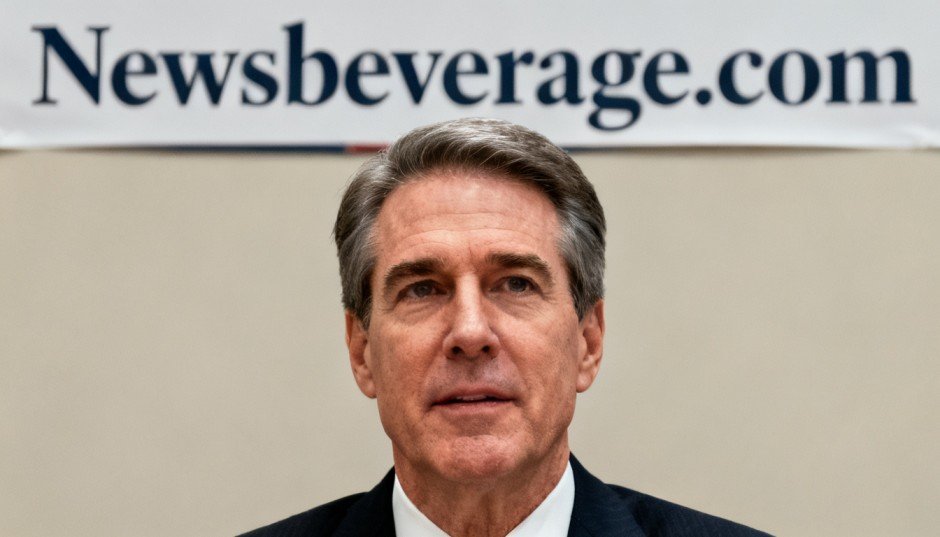
James Comey News: The Shocking Indictment That Divided America 2026
Introduction
If you have been following James Comey news lately, you know things just got a whole lot more serious. On April 28, 2026, a federal grand jury indicted the former FBI director for the second time. This time, the charges stem from a simple Instagram photo of seashells on a beach. That photo, showing shells arranged to spell out “86 47,” has now triggered a two-count federal indictment that carries a maximum sentence of 20 years in prison.
This is not just a legal story. It is a story about political power, First Amendment rights, and the question of whether the Justice Department is being used as a weapon against political opponents. In this article, you will get the full picture: who James Comey is, what happened, what the charges mean, and why millions of Americans are watching this case very closely.

Who Is James Comey? A Quick Background
Before you can understand James Comey news today, you need to know who he is and why he matters.
James Brien Comey Jr. was born on December 14, 1960, in Yonkers, New York. He graduated from the College of William and Mary and earned his law degree from the University of Chicago Law School. From there, he built one of the most distinguished careers in American law enforcement.
He served as the U.S. attorney for the Southern District of New York, where he prosecuted Martha Stewart in the high-profile ImClone insider trading case. He later became Deputy Attorney General under President George W. Bush, where he made headlines for refusing to reauthorize a controversial domestic surveillance program, even visiting a hospitalized Attorney General John Ashcroft to block White House pressure.
In September 2013, President Barack Obama appointed him as the seventh Director of the FBI. He was confirmed by the Senate 93 to 1.
His FBI tenure became one of the most controversial in the bureau’s history. In 2016, he publicly announced that the FBI would not recommend charges against Hillary Clinton over her private email server, a decision that angered both Republicans and Democrats for different reasons. Then, just 11 days before the presidential election, he sent a letter to Congress announcing the FBI was reviewing new Clinton emails, a move that many analysts believe altered the course of the 2016 election.
President Donald Trump fired Comey on May 9, 2017, just four years into his ten-year term. Trump later admitted in an interview that the Russia investigation was on his mind when he made that decision. That firing triggered the appointment of Special Counsel Robert Mueller, launching one of the most consequential investigations in modern American history.
Since leaving the FBI, Comey has written two memoirs and a series of crime novels. He has remained a vocal critic of Trump on social media and through his Substack newsletter.
The Seashell Photo That Changed Everything
Here is where the current James Comey news begins.
In May 2025, Comey posted a photo on his Instagram account. The image showed seashells on a beach in North Carolina arranged in the sand to form the numbers “86 47.” His caption read simply: “Cool shell formation on my beach walk.”
The reaction from Republicans was immediate and fierce. The number “86” is slang for getting rid of something or someone. Trump holds the title of the 47th president of the United States. Put them together, and many on the right claimed the photo was a coded call for violence against Trump.
Donald Trump Jr. publicly accused Comey of calling for his father to be murdered. Then-Secretary of Homeland Security Kristi Noem announced a Secret Service investigation. Comey quickly deleted the post and said he “didn’t realize some folks associate those numbers with violence.” He said he saw the shells as a political message, not a violent one, and that he opposes “violence of any kind.”
The Secret Service conducted an hours-long interview with Comey in Washington, D.C. Investigators concluded he had seen the shells on a North Carolina beach and had no hand in creating the formation himself.
At that point, no charges were filed.
The First Indictment: A Case That Collapsed
James Comey news had already been alarming before the seashell controversy.
In late September 2025, a federal grand jury indicted Comey on charges that he lied to Congress and obstructed justice. The charges were tied to testimony he gave before the Senate Judiciary Committee in September 2020. Prosecutors alleged he had authorized a media leak through an anonymous source and then denied doing so under oath.
Comey pleaded not guilty. His legal team argued that the prosecution was politically motivated, claiming Trump had ordered prosecutors to charge Comey “out of personal spite.”
The case was assigned to Lindsey Halligan, who had been appointed as interim U.S. attorney for the Eastern District of Virginia. In November 2025, a federal judge dismissed the case entirely. The judge ruled that Halligan had been unlawfully appointed, meaning the indictment itself was legally defective. A similar ruling threw out charges against New York Attorney General Letitia James around the same time.
The Justice Department appealed. Halligan quietly left her post in January 2026. The first case, for all practical purposes, was dead.
The Second Indictment: What the Charges Say
Now comes the latest and most dramatic James Comey news.
On April 28, 2026, the Justice Department secured a new two-count indictment against Comey in the Eastern District of North Carolina, where the beach photo was allegedly taken. Acting Attorney General Todd Blanche announced the charges at a press conference.
The two counts are:
- Knowingly and willfully making a threat to take the life of, or inflict bodily harm on, the President of the United States
- Knowingly and willfully transmitting a threat in interstate commerce
Each count carries a maximum prison sentence of 10 years. Blanche confirmed that a warrant has been issued for Comey’s arrest.
The indictment argues that “a reasonable recipient who is familiar with the circumstances” would interpret the seashell photo “as a serious expression of an intent to do harm to the President of the United States.”
The timing raised eyebrows immediately. The indictment came just three days after Trump was evacuated from the White House Correspondents’ Dinner following an alleged assassination attempt. It also came less than a month after Trump fired Attorney General Pam Bondi, who critics said was not aggressive enough in pursuing his political opponents. Blanche, a former personal attorney for Trump, stepped in as acting Attorney General.
How Comey Responded
Comey did not stay silent.
Within hours of the indictment, he posted a video message to his Substack account. He appeared calm and direct.
“Well, they’re back,” he said. “Nothing has changed with me. I’m still innocent, I’m still not afraid, and I still believe in the independent federal judiciary, so let’s go.”
He added a message aimed at a broader audience: “It’s really important that all of us remember this is not who we are as a country. This is not how the Department of Justice is supposed to be. And the good news is we get closer every day to restoring those values. Keep the faith.”
His attorney, Patrick Fitzgerald (the same prosecutor who handled the Valerie Plame leak investigation), issued a formal statement: “Mr. Comey vigorously denies the charges. We will contest these charges in the courtroom and look forward to vindicating Mr. Comey and the First Amendment.”

Legal Experts Weigh In
Not everyone agrees that this indictment will hold up in court.
Several First Amendment attorneys and legal commentators have argued that Comey’s post falls well within the range of protected political speech. Sharing an image of shells on a public beach, with no explicit call to action, is a long way from a direct threat. Legal analysts at CNN called the indictment “deeply flawed.”
Blanche pushed back at the press conference. “You are not allowed to threaten the President of the United States of America,” he said. “That’s not my decision. That’s the law of the United States.”
The case is assigned to U.S. District Judge Louise Flanagan, appointed by President George W. Bush in 2003. The outcome may hinge on how the court interprets what constitutes a “true threat” under First Amendment jurisprudence, a legal standard that requires proof of a genuine intent to commit violence, not just ambiguous symbolism.
The Bigger Political Picture
You cannot understand this story without looking at the larger context.
Trump has openly and repeatedly called for his critics to be prosecuted. In September 2025, he posted on Truth Social urging Bondi to take action against Comey, Letitia James, and Senator Adam Schiff. He wrote that they were “all guilty as hell.” James was indicted weeks later. A federal probe into Schiff was reportedly closed due to insufficient evidence.
Critics argue that the DOJ under Blanche has become an instrument of political retaliation. The fact that the first Comey case collapsed on a procedural technicality, and was swiftly replaced by a new theory of prosecution, reinforces that concern for many legal observers.
Supporters of the prosecution argue that threatening the president, even symbolically, must be taken seriously. They point to the broader pattern of real-world threats against public officials and say that no one, regardless of political credentials, should escape accountability.
This debate is not going away. And as the case moves forward, it will force American courts to draw a very clear line between political speech and criminal threats.
Key Timeline of James Comey News
Here is a quick snapshot of the major moments:
2013: Obama appoints Comey as FBI Director, confirmed 93 to 1.
July 2016: Comey declines to recommend charges against Hillary Clinton over her private email server.
October 2016: Comey sends Congress a letter about newly discovered Clinton emails, 11 days before the election.
May 2017: Trump fires Comey. Mueller investigation begins.
May 2025: Comey posts the “86 47” seashell photo on Instagram. Secret Service investigates.
September 2025: First indictment for lying to Congress and obstruction. Comey pleads not guilty.
November 2025: Federal judge dismisses first indictment, ruling the prosecutor was unlawfully appointed.
April 28, 2026: Second indictment filed in North Carolina over the seashell photo. Arrest warrant issued.
What Happens Next?
The case now moves to the Eastern District of North Carolina. Comey must appear before the court, and his legal team is expected to challenge the charges on First Amendment grounds. Given the legal complexity and political weight of this case, appeals are almost inevitable regardless of the initial outcome.
Watch for motions to dismiss in the coming weeks. Comey’s legal team has a strong track record of challenging the procedural legitimacy of this prosecution. They may argue selective prosecution, vindictiveness, or that the post does not meet the legal standard for a “true threat.”
At the same time, the broader political battle over DOJ independence will continue to play out in Congress, in the press, and in the courts.
Conclusion
The latest James Comey news is genuinely unprecedented. A former FBI director, indicted for the second time, over a beach photo. Whether you see this as justice or political retribution likely depends on where you stand politically. But you have to acknowledge that this case will shape how America defines the limits of free speech, the independence of federal prosecutors, and the proper use of executive power for years to come.
What do you think? Is this a legitimate prosecution, or is it a troubling sign of political overreach? Share your thoughts, forward this article to someone who needs the full story, and keep watching this space as the case unfolds.
Frequently Asked Questions
1. Why was James Comey indicted again in 2026? A federal grand jury indicted Comey on April 28, 2026, over a social media post he made in May 2025 showing seashells spelling out “86 47.” The DOJ argued the post constituted a threat against President Trump.
2. What does “86 47” mean? “86” is slang for getting rid of something. “47” refers to Trump’s status as the 47th president. Critics of the prosecution argue the numbers were a political message, not a threat.
3. What happened to Comey’s first indictment? A federal judge dismissed the first indictment in November 2025, ruling that the prosecutor who secured it was unlawfully appointed to her position.
4. What charges does Comey face now? He faces two federal charges: making a threat against the president and transmitting a threat in interstate commerce. Each carries a maximum of 10 years in prison.
5. Has Comey been arrested? As of the indictment on April 28, 2026, an arrest warrant was issued. Blanche said Comey was welcome to turn himself in. No set court date had been announced.
6. What did Comey say about the indictment? He posted a video stating he is “still innocent, still not afraid,” and called the prosecution inconsistent with American values of justice and DOJ independence.
7. Who is handling Comey’s defense? His attorney is Patrick Fitzgerald, the former federal prosecutor famous for the Valerie Plame CIA leak investigation.
8. Is the seashell post protected by the First Amendment? Several legal experts believe it is. The legal question centers on whether it meets the standard of a “true threat,” which requires proof of genuine intent to cause harm, not just symbolic or ambiguous expression.
9. Who is acting Attorney General Todd Blanche? Todd Blanche is a former personal attorney for Donald Trump who stepped into the acting AG role after Trump fired Pam Bondi in April 2026. He announced Comey’s second indictment.
10. Why does James Comey matter to American politics? Comey’s decisions during the 2016 election, his firing by Trump in 2017, and the subsequent Mueller investigation made him one of the most consequential figures in modern U.S. political history.
Author Bio
Sarah Mitchell is a political journalist and legal analyst with over 12 years of experience covering U.S. federal law, Capitol Hill, and national security. She has contributed to major digital publications and specializes in translating complex legal proceedings into clear, accessible reporting for everyday readers.
Also read Newsbeverage.com
Email: johanharwen314@gmail.com
Author Name: Johan Harwen